Spoiler warning: This review discusses significant plot developments and character outcomes in Five Figurines.
Not often does one encounter such a seamless duet between cinematography and storytelling, between performance and picture, as one finds in Five Figurines. Directed by Akay Mason, with Emmanuel Igbekele as director of photography, Five Figurines tells a revenge story through a marriage of stylistic visual choices and a compelling narrative, maintaining a taut thread of tension from beginning to end and navigating intricate thematic turns before ultimately landing in a satisfying finish.
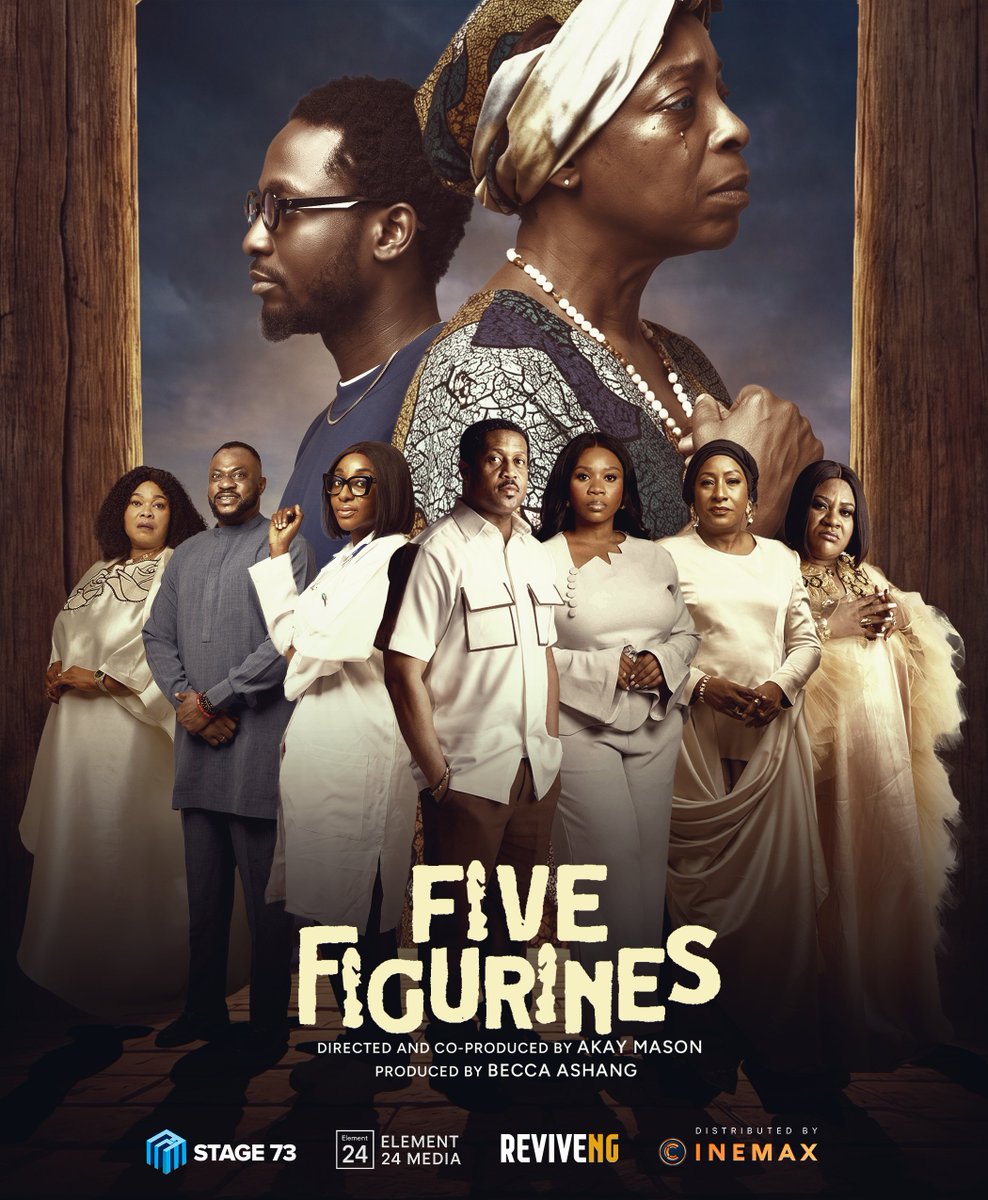
Ebi, portrayed by Bimbo Akintola, is the mother of Innocent (Chimezie Imo). Innocent is a sweet, light-hearted young man whose name describes his character as much as it foreshadows his eventual role in the plot. Innocent is in a relationship with Grace Bassey (Uche Montana), a privileged young girl from an affluent background. Their story is sweet and warm, except that Grace’s friends, who are even more privileged than she is, look down on Innocent and disapprove of their relationship. The dynamic between Innocent and the group reaches a head when a quarrel between Innocent, Grace and her friends results in Innocent’s tragic death. Through his death, Ebi, Innocent’s mother, undergoes a transformation from helpless grief to acceptance and eventually to raging anger. At this point, Bimbo Akintola delivers an electrifying performance as an angel of death on a personal mission to judge the wicked.
Five Figurines tells a story that has been told before, over and over. A tragedy at the hands of the powerful. The helplessness of the underdog, bent and battered until she finally breaks. The eventual thirst for blood and retribution. Akay Mason, however, adds considerable weight to his version of this Kill Bill-esque plot in three distinct ways. First, he deftly manoeuvres a star-studded cast, bringing together Nollywood veterans like Bimbo Akintola, Ini Edo, Odunlade Adekola, Ireti Doyle, and Mike Ezuruonye without letting their presence overshadow the emerging talents. Among them is Clinton Joshua, who delivers a standout performance as Richard Bello, one of Grace’s friends who had a hand in Innocent’s death. He embodies an insufferable, privileged young man so convincingly that you can’t help but hate him.
Secondly, in its reach for deeper substance, Five Figurines wagers on the goodness of the human heart. We have the tussle between good and evil, the virtuous and the wicked, the rich and the poor, Ebi and Innocent against the world of the heartless Nigerian elite. Then, we have Grace Bassey walking the line between good and evil, torn between her desire to do the right thing and her fear of the consequences of speaking out. For the majority of the film, Grace’s morality remains in question, establishing a theme of the ordinary person caught between a rock and a hard place, with seemingly nowhere to turn. This adds a welcome dimension to the usual black-and-white portrayal of virtue. Going further, Five Figurines embraces the moral principle of tempering judgment with mercy, allowing compassion to find its way into Ebi’s heart even in her quest for vengeance. Ebi spares Emmanuel (Emeka Nwagbaraocha) and Grace, despite having the power to take both their lives. This sharply contrasts with the indifferent hostility she faced from the very people she chose to spare.
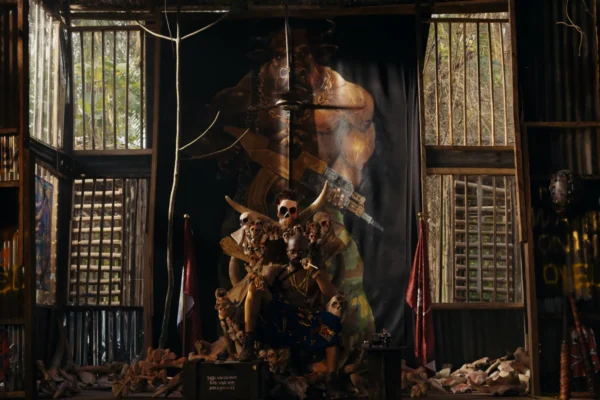
Lastly, Five Figurines presents a study in artistic symmetry through the collaboration between picture and plot. Its success as a gripping psychological thriller that never loses its edge until the final scene owes much to how every visual choice reinforces the intentions of the performances and the story, from the distinctive use of lighting, composition, and framing to memorable techniques like the double-dolly shot. In this technique, the camera and actor move simultaneously in the same direction and at the same speed, creating the impression of the character gliding through the scene. Popularised by auteur director Spike Lee, the double-dolly shot is employed in Five Figurines to establish the emotional state of Hajiya Aisha Usman (Ireti Doyle) as she leaves the police station after talking to Ebi, making for a love letter to expressive cinematography.
Working with an archetypal plot, Akay Mason and Emmanuel Igbekele have delivered a film that rises above the familiarity of its premise. At its core, Five Figurines asks its audience, “When it comes to choosing between all that is right and good, and everything that is self-serving and dark, where will you stand?” Through this approach, the film shows what becomes possible when a director and his director of photography share genuine chemistry.