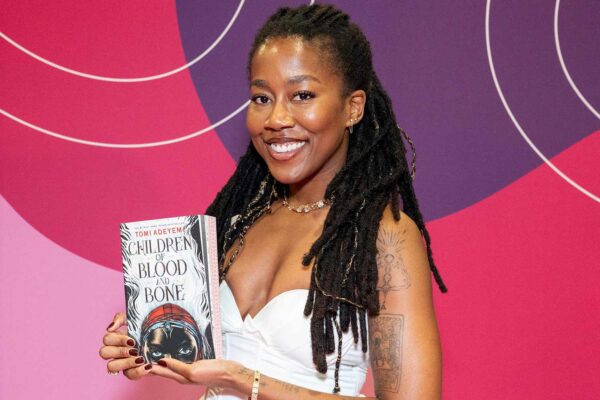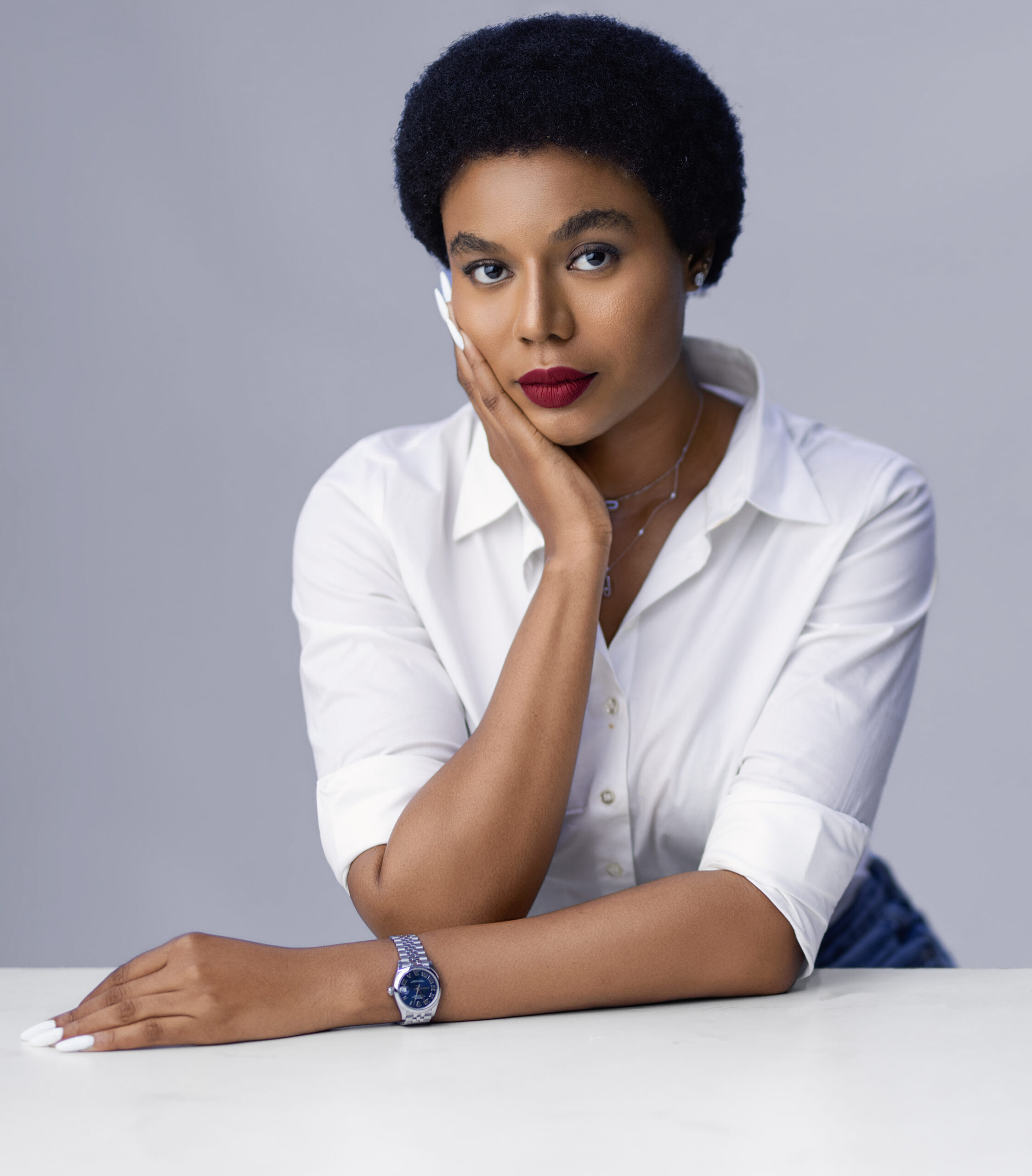
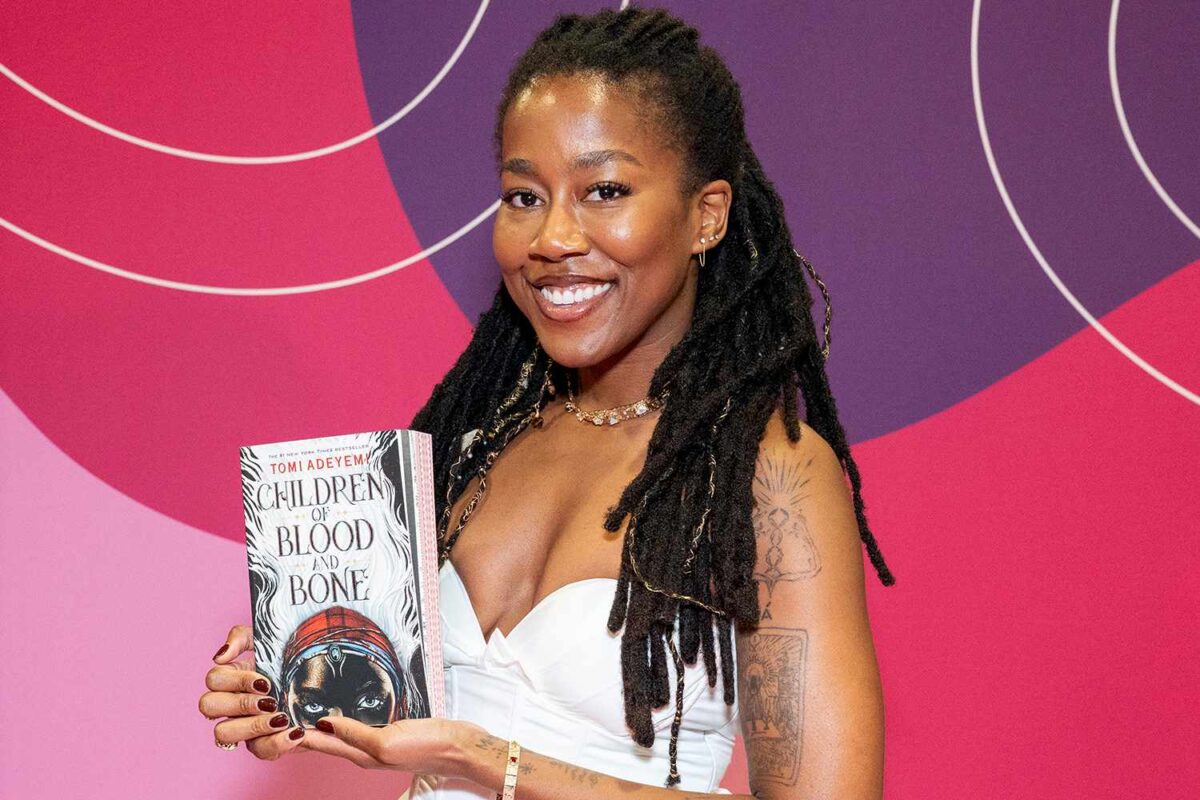
Months after publicly distancing herself from the film adaptation of her bestselling novel, Nigerian-American author Tomi Adeyemi has returned to celebrate the project. But what really happened between the writer and the production of Children of Blood and Bone
There was a time when the prospect of seeing Children of Blood and Bone on the big screen represented a dream coming full circle for Tomi Adeyemi.
Her debut novel, published in March 2018, had become an international literary sensation. Inspired by Yoruba mythology and West African culture, the fantasy novel introduced readers to Zélie Adebola, a young diviner on a mission to restore magic to the fictional kingdom of Orïsha after its monarchy systematically eradicates it.
The book debuted at number one on The New York Times Young Adult Bestseller list, establishing Adeyemi as one of the most prominent voices in contemporary young adult fantasy literature. For a story deeply connected to African mythology, identity, and representation, its eventual transition into a major Hollywood production was significant.
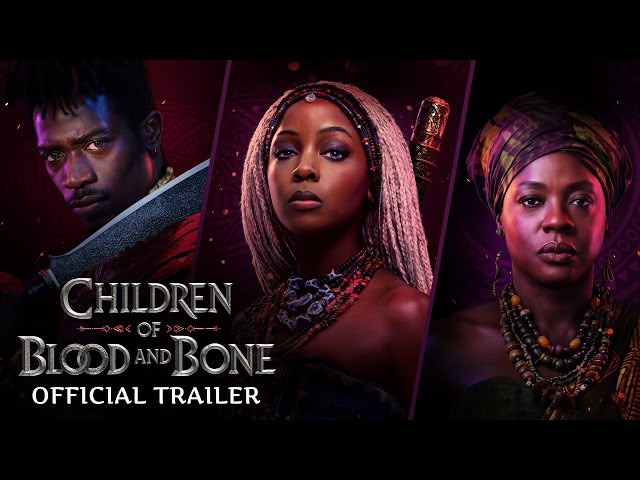
Directed by Gina Prince-Bythewood, with Paramount Pictures backing the adaptation and an impressive ensemble cast featuring Thuso Mbedu, Amandla Stenberg, Damson Idris, Cynthia Erivo, Viola Davis, Idris Elba, Regina King and Chiwetel Ejiofor, the film was shaping up to be one of the most anticipated fantasy adaptations in recent years.
But somewhere along the journey from the pages of Adeyemi’s novel to the film set, the relationship between the author and the production appeared to take a difficult turn.
And what followed was a rather unusual Hollywood story.
The First Signs of Trouble
In July 2026, Adeyemi began raising questions about her relationship with the film adaptation. In a now-deleted TikTok video, the author shared screenshots of messages and explained that there was a reason she had stopped posting about the adaptation of her work. She was particularly emphatic about her decision not to watch the film.
“I have not seen the film, and I will not watch it,” she communicated in one of her posts.
Perhaps more revealing were screenshots of an apparent exchange between Adeyemi and actress Amandla Stenberg, who plays Princess Amari in the adaptation.
In a message dated February 2025, Stenberg appeared to express a desire to reconnect with the author as human beings. Adeyemi’s reported response was direct: “Do not ever use my name in an interview or video again. Do not text me. Do not call me.” The exchange immediately generated conversations across social media, with audiences attempting to understand what could have happened between the writer and one of the film’s leading actors.
However, the screenshots did not establish the full context of their disagreement.
It was also important to note that Stenberg had previously faced criticism from sections of the book’s readership over her casting as Princess Amari, particularly concerning colourism and the representation of skin tones in the original story. Adeyemi did not publicly establish that the casting controversy was the reason for their disagreement. Nevertheless, the situation had introduced another layer of tension to an adaptation already attracting considerable attention.
‘The Worst Thing I Have Ever Had to Live Through’
If the initial posts generated questions, Adeyemi’s subsequent video made it clear that her dissatisfaction extended beyond a simple disagreement. Following the release of the film’s first trailer on July 28, 2026, the author posted another emotional video in which she spoke about her experience during production.
She alleged that she had endured a difficult situation for approximately a year and a half and that senior individuals involved in the production were aware of what she was experiencing.
According to Adeyemi, rather than improving the situation, those involved had continued to antagonise her. She described leaving the set of her own film adaptation “hyperventilating and sobbing”. She also said that, after returning to America, she experienced severe physical pain and repeated panic attacks.
Her account was particularly striking because Adeyemi was not an outsider commenting on an adaptation of her work. She had been involved in the filmmaking process and co-wrote the screenplay alongside director Gina Prince-Bythewood. Yet, despite her involvement, she described the experience as deeply distressing.
In her words, the film, which she had worked on to make things better for her community, had become “the worst thing I have ever had to live through”.
She concluded that she wanted to move on and no longer wished to hear about the project. The statement was a remarkable development for a film whose original selling point was the opportunity to bring an author’s imaginative world to life. But perhaps the most significant part of Adeyemi’s account was what she did not reveal.
She did not identify the individuals she accused of antagonising her, explain the specific incidents that occurred on set, or provide a detailed account of the circumstances that led to her departure. The author also indicated that the people at the highest levels of the production were aware of her situation.
At the time, representatives for Paramount Pictures and director Gina Prince-Bythewood had not publicly responded to her allegations, according to reporting by Premium Times.
Consequently, while Adeyemi’s account established that she had experienced significant distress, the precise circumstances behind the fallout remained unclear.
Is This About Creative Control?
One question that naturally emerged from the controversy concerned the author’s creative influence over the adaptation.
After all, this was her story.
Adeyemi had spent years creating the world of Orïsha, its mythology, characters and central themes. The film was an opportunity to see that world translated into a different artistic medium. However, writing a novel and directing a film are fundamentally different creative responsibilities. In an interview with The Guardian published on September 27, 2026, Adeyemi offered an important perspective on the distinction.
Speaking about the adaptation, she explained that the director makes the decisions in filmmaking, unlike writing a book, where she can control every choice down to the commas.
She further clarified that the film’s creative decisions were not hers.
Her comments provide some insight into the different creative relationships an author enters when their work is adapted for cinema. However, they do not establish that creative control was the specific cause of her disagreement with the production.
Adeyemi also declined to explain precisely what had happened on set when The Guardian asked her directly. The publication reported that she described the entire journey of the trilogy and its adaptation as an experience that had taken everything out of her.
Interestingly, she also said that she had no intention of adapting another one of her books for the screen. It is a significant statement from an author whose debut became a major Hollywood property.
And Then Came November 16.
Just when audiences might have assumed that Adeyemi had permanently separated herself from the film, something unexpected happened. On November 16, 2026, the author shared the film’s trailer on Instagram. But this time, the message was entirely different.
Rather than expressing disappointment or distancing herself from the production, Adeyemi celebrated the film and acknowledged the efforts of the people who had brought the project to life. Describing the franchise as an “impossible dream”, she reflected on the inspiration behind the original story and the journey of seeing it move towards the big screen.
She specifically acknowledged the director, Gina Prince-Bythewood, and the hundreds of people who had worked both in front of and behind the camera. She also expressed hope that audiences would feel empowered, beautiful and celebrated when they watched the film.
“It is meant to celebrate you and uplift you, and moving forward, that is all I want to do,” she wrote.
She went further to thank her family, mentors and readers who had supported her and the story throughout its almost a decade-long journey. For an audience that had watched the author publicly distance herself from the adaptation only months earlier, the post was a notable change in tone.
It was also a reminder that the film had become much bigger than the disagreement between its author and the production. Hundreds of people had contributed their time, talent, and resources to bringing Orïsha to life. The film also represented an opportunity for audiences, particularly young Black audiences, to see African-inspired fantasy on a major international screen.
So, What Actually Happened?
This is perhaps the biggest question surrounding the entire situation. Did Adeyemi and the production resolve their differences? Did there eventually come a point where she reconsidered her position? Was her latest post simply an acknowledgement of the work done by the cast and crew, independent of her personal experience?
At the time of writing, none of these questions has received a definitive public answer.
Her November 16 post does not explicitly state that the earlier disagreements have been resolved. Neither does it explain whether she has changed her mind about watching the film. It would therefore be premature to describe the latest development as a reconciliation between the author and the production. What we can establish is that her public position has changed.
In July, she said she never wanted to hear about the project again. In November, she was encouraging audiences to experience it in cinemas. Both statements exist, and neither should be ignored. Perhaps the most important distinction is that celebrating the work of hundreds of filmmakers does not necessarily mean that an individual has resolved every personal difficulty associated with the production.
And that is where this story becomes particularly interesting.
Beyond Tomi Adeyemi: The Complicated Relationship Between Authors and Film Adaptations
The Children of Blood and Bone situation also opens up a much bigger conversation about the relationship between authors and the film industry. When a book becomes a film, the transition involves more than transferring characters and dialogue from one medium to another. It involves interpretation. A director, screenwriter, producers, actors, cinematographers, and other creative departments all contribute to the final artistic vision.
Sometimes, the result is remarkably close to what the original author imagined. In other instances, the adaptation develops an identity of its own. For authors, this can be an exciting but complicated experience, particularly when the original work carries personal, cultural or historical significance.
In Adeyemi’s case, Children of Blood and Bone was never simply another fantasy novel. Its creation was partly inspired by her desire to see dark-skinned Black girls occupy the centre of epic fantasy stories.
In a September interview with The Guardian, she reflected on the responsibility she felt after the book’s success and the expectations placed upon her as a prominent Black female author. That context makes the film adaptation particularly significant. The story belongs to a larger conversation about African mythology, cultural representation and the global appetite for stories beyond familiar Western fantasy traditions.
For many readers, the film is an opportunity to see a world inspired by Yoruba mythology receive the scale and production treatment of a major international fantasy franchise.
That opportunity remains significant, regardless of the controversy surrounding its production.
The Final Act Is Yet to Come
With its theatrical release scheduled for January 15, 2027, Children of Blood and Bone is approaching another important stage in its journey. The film has the ingredients of a major international production: an established director, an impressive cast, a globally recognised literary property, and a story rooted in West African cultural inspiration.
But the conversation surrounding the adaptation has now expanded beyond its plot, casting and visual presentation. It has become a story about ownership, creative relationships, representation and the complicated realities of bringing an author’s personal vision into the machinery of Hollywood filmmaking.
Tomi Adeyemi may now be encouraging audiences to watch the film, but the questions raised by her earlier statements have not entirely disappeared.
And perhaps that is the most fascinating part of this saga.
The world of Orïsha is finally coming to the big screen. Yet, before audiences even get to experience the film, the story behind its production has already become a conversation of its own.
For now, one question remains: Has Tomi Adeyemi made peace with Children of Blood and Bone, or has she simply decided to celebrate what the film represents, despite everything she says she experienced along the way?
Until she chooses to explain further, the answer remains hers to give.
Featured Image Credit: Marla Aufmuth/Getty