
“When you make a film, you are competing globally. If you are in construction, you are building houses in your country. But when you make a film, you create a product anyone, anywhere in the world, can consume.
You can tell a story rooted in your culture, your traditions, and your social realities, but it has to be compelling enough to travel beyond them. I don’t want to make a film where I have to keep explaining things to the audience. Wherever the story goes, it should speak for itself. People should be able to enter that world, even when it is completely different from their own, and understand it.”
From screenwriting to production, distribution and festival programming, Faustina Okomayin’s work has given her an expanding understanding of what it takes to build a lasting presence in the film industry. As Deputy Festival Director of the Naija AI Film Festival and the recently appointed Head of Business and Partnerships at Magic Carpet Studios, she brings this experience to the intersection of storytelling, strategy and the business of film.
In her conversation with OYA Magazine, Okomayin reflects on the thinking behind her career and the three principles that define her approach: “Story is culture, IP is wealth, and strategy is key.”
Inside the Role of a Festival Director
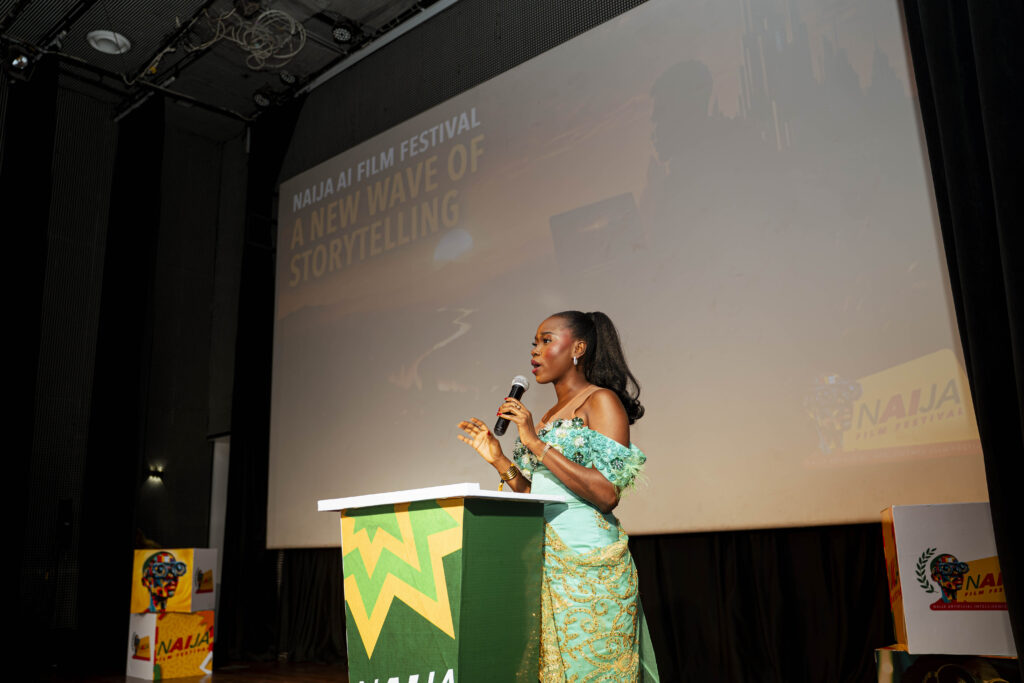
As Deputy Festival Director of the Naija AI Film Festival, Faustina Okomayin’s responsibilities extend beyond screening and selecting films. She oversees film programming, from reviewing submissions and curating selections to presenting shortlisted films to the judges, who determine the winners across different categories. She also studies patterns in submissions and uses these insights to improve the festival’s programming.
This attention to patterns reflects a principle Okomayin considers essential to filmmaking: strategy. For her, the work doesn’t end when a good story is written, or a film is completed. Filmmakers must think deliberately about how they develop, position, finance, and ultimately bring their projects to an audience.
Strategy Is Key
For Faustina Okomayin, one of filmmaking’s biggest misconceptions is that a good story will naturally find its audience.
“The biggest lie that we have told ourselves in this industry is that a good story will sell itself,” she says. “That’s not true. There are many good stories sitting on hard drives. Nobody knows them.”
For Okomayin, getting a film made is only part of the work. Filmmakers must also think carefully about how they position their projects, who backs them, the audiences they want to reach and the opportunities they hope to secure.
She likens this approach to the strategic thinking of a politician or a businessperson, where success depends not only on what one has to offer but also on how effectively one builds support and navigates the landscape.
The lesson for African filmmakers is to treat strategy as an integral part of the creative process, rather than something to consider after a film is complete. Research, relationships, positioning and market understanding should inform the journey from concept to audience.
The Art of Negotiation
For Faustina Okomayin, having a compelling story is only one part of the equation; knowing how to get it made is another. Negotiating, understanding numbers and making a convincing case to financiers are becoming essential parts of her evolving career.
“I have stories I want to tell, but if I cannot get the funding, it’s not going to go anywhere,” she explains.
This reflects the reality that filmmaking demands more than creative vision. It requires the business acumen to secure financing and the strategic thinking to position a story for audiences beyond its cultural origins.
For Okomayin, a story may be deeply rooted in her own culture, but it must also possess the appeal to resonate with audiences across borders. Without that, taking it to the international market becomes a much harder sell.
The Importance of ROI
For Faustina Okomayin, the business of filmmaking must answer two important questions: can a film make its money back, and are African audiences consuming the stories produced on the continent?
“Because that’s one major part of this story that lots of people are not looking at. It’s us making our money back, right? And making sure that our people consume our products.”
Her internship with Afro Films Global gave her a closer look at how these considerations shape the journey from production to distribution. The company worked with completed films while also engaging with filmmakers whose projects were still in pre-production. For some, the conversations involved exploring pre-sale opportunities and submitting pitch decks to prospective companies.
Securing commercial partnerships, identifying potential buyers and understanding a project’s return prospects are all part of building a sustainable film business.
The Distributor’s Hack: Bring Them In Before the Cameras Roll
For Faustina Okomayin, one of filmmaking’s most overlooked advantages is the knowledge distributors bring. Beyond selling completed films, distributors and platform buyers have access to historical data and audience insights that can help filmmakers understand what viewers gravitate towards and what makes a project commercially viable.
Her experience at Afro Films Global sharpened this perspective. During her internship, she sat in on sessions with buyers at film markets, reviewed trailers, answered questions and joined conversations about the films being presented. These interactions revealed that selling a film isn’t simply about finding someone willing to take it. It involves understanding the market, positioning the story and identifying potential buyers whose interests align with the project.
She believes many Nigerian filmmakers miss an important opportunity here. Too often, filmmakers develop stories, take them into production and only begin seeking distributors when the films are ready for sale. By then, some decisions that market intelligence could have informed have already been made.
“In other parts of the world, they start these conversations before they even get into pre-production so that everything is set,” she observes.
The lesson is simple: distribution should not be an afterthought. By bringing distributors into the conversation early, filmmakers can begin building a pathway to their audience before the cameras roll, rather than trying to find a market for a finished film.
This Thing Called AI
For Faustina Okomayin, the debate about artificial intelligence and its place in filmmaking should begin with a simple distinction: AI is a collaboration between man and machine, and the human being remains central to how the technology is used.
“There’s no way that the machine will kill the man because it’s the man that programs the machine,” she argues.
For Okomayin, streaming services and social media have disrupted the traditional routes through which films generated revenue, from cinema releases to television and other distribution windows. With audiences now spread across multiple platforms, recouping production costs has become less predictable.
In this changing landscape, she sees AI offering African filmmakers a significant advantage. Productions that once required elaborate sets, extensive location construction or expensive period recreations could become more financially accessible.
For a continent rich in histories, traditions and stories that remain largely untold on the global stage, the possibilities are considerable. AI could help filmmakers bring these narratives to life, develop valuable intellectual property and create work that can compete in international markets.
The Money-Making Part of AI
For actors, one opportunity could be licensing their likenesses for AI-generated productions, allowing them to earn from authorised uses of their images while continuing to work in live-action films. Such arrangements would require clear agreements on consent, compensation and the scope of use.
For Okomayin, these possibilities point towards a future in which performers could develop additional revenue streams rather than be excluded from the technology altogether.
“We can create those IPs,” she says, emphasising the importance of African filmmakers owning the stories and creative assets they develop. Her vision is one in which the continent does not merely supply stories for others to adapt, but builds the capacity to produce, own and commercialise them.
Ultimately, Okomayin believes the question is not whether AI will change filmmaking, but whether African filmmakers will be ready to take advantage of that change.
For her, this moment calls for both urgency and ownership: an opportunity to tell stories long out of reach, retain control of the intellectual property they generate and ensure Africa helps shape the future of filmmaking rather than simply adapting to rules established elsewhere.
Nollywood’s Pain Point
For Faustina Okomayin, one of Nollywood’s most pressing challenges lies not necessarily in the stories filmmakers want to tell, but in how those stories make it from idea to screen. She believes the industry has no shortage of compelling concepts; the difficulty often lies in execution, from screenplay development to production.
“We have nice story ideas, fantastic story ideas, but sometimes I realise that along the line, the plot is lost,” she explains.
For Okomayin, the real work lies in translating a promising idea into a well-developed screenplay and executing it effectively on screen.
Distributors can offer feedback on a film’s commercial appeal, including whether familiar faces might attract audiences. They can also share insights into changing audience preferences and the genres viewers appear more inclined to watch. Okomayin notes that buyers may, for example, show stronger interest in action comedies than in straight action films.
Such insights can help filmmakers make informed decisions about how to position their projects. But market intelligence can only go so far. For Okomayin, the distinction is clear: distributors can help filmmakers understand the market, but they cannot do the creative work for them. The people who write, develop and produce films remain responsible for turning a fantastic idea into a compelling story on screen.
The Audience Pain Point
For Faustina Okomayin, Nollywood’s challenges extend beyond executing its stories to the economics of getting them to audiences. Even when people want to watch Nigerian films, the cost of access can get in the way.
“I remember when I watched films in cinemas for as little as five hundred naira on Wednesdays,” she recalls, reflecting on how much the cost of a cinema experience has changed. Today, she observes, even a ₦5,000 ticket can be a significant expense for many Nigerians, especially in an economy where disposable income is under pressure.
For Okomayin, the contrast between free and paid content points to audience appetite. Nigerian content attracts substantial viewership on platforms such as YouTube, where audiences can watch without paying directly. But when access comes at a price, that enthusiasm can meet the limits of what people can afford.
She believes the industry needs to explore more accessible ways of reaching audiences. One possibility is developing community cinemas in local government areas and community centres, bringing film screenings closer to people rather than relying solely on conventional cinema locations.
She also sees potential in transactional streaming models that allow viewers to rent individual films at low prices, rather than commit to a subscription. Another idea is a more coordinated African streaming platform where audiences can find films from across the continent in one place. She recognises that building and sustaining such a platform would come with its own financial and operational challenges, but believes the conversation is worth having.
The challenge, then, is not necessarily convincing Nigerians to watch their own films, but finding ways to make them accessible. An industry cannot fully realise the value of its stories if the people who want to consume them are priced out.
“If we could get this film to people at a price that they can afford, I think we would have achieved something great,” she says.
Africa’s Virgin Stories: The Future of Film
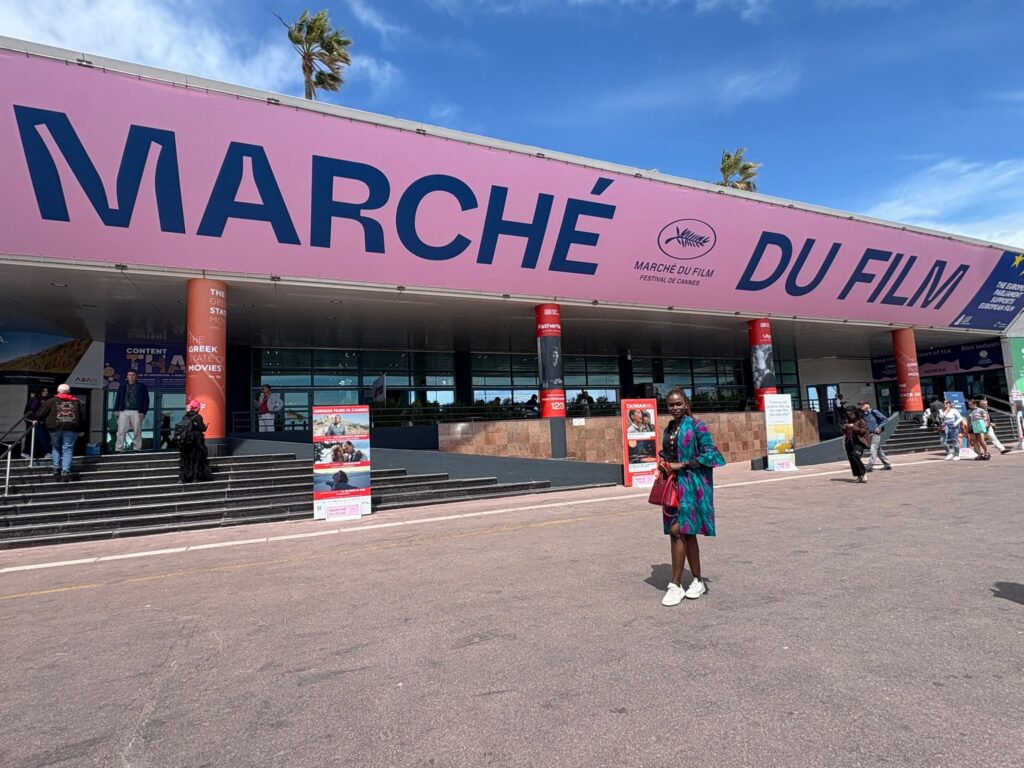
Her internship with Afro Films Global gave Faustina Okomayin the chance to engage with people from different parts of the world and hear their perspectives on African storytelling. Those conversations have only strengthened her conviction about the continent’s place in the future of filmmaking.
“Africa is the future,” she declares.
For Okomayin, that future lies partly in the wealth of untold stories the continent holds. This abundance of untapped intellectual property offers an opportunity not just to tell new stories, but to introduce the world to perspectives it has barely begun to explore.
Yet the opportunity extends beyond creating content for global consumption. Africa is also home to a vast population with the potential to sustain its own thriving film market. Realising this potential will require making films more accessible to African audiences.
For Okomayin, the future is therefore twofold: bringing Africa’s untold stories to the world and building an audience at home that can watch, embrace and sustain them.
Food for Thought
“Story is culture, IP is wealth, and strategy is key. You have to be strategic with your film or your product. If you cannot wear the business hat as a creative, you can bring someone onto your team who understands the business, allowing you to focus on the creative side. But if you can bring these three things together- your story, your IP and your strategy- you can achieve anything with film.”
Credits:
Interview & Written By: Rotimi Feyisayo Guidiance
Edited By: Rhoda Akintola