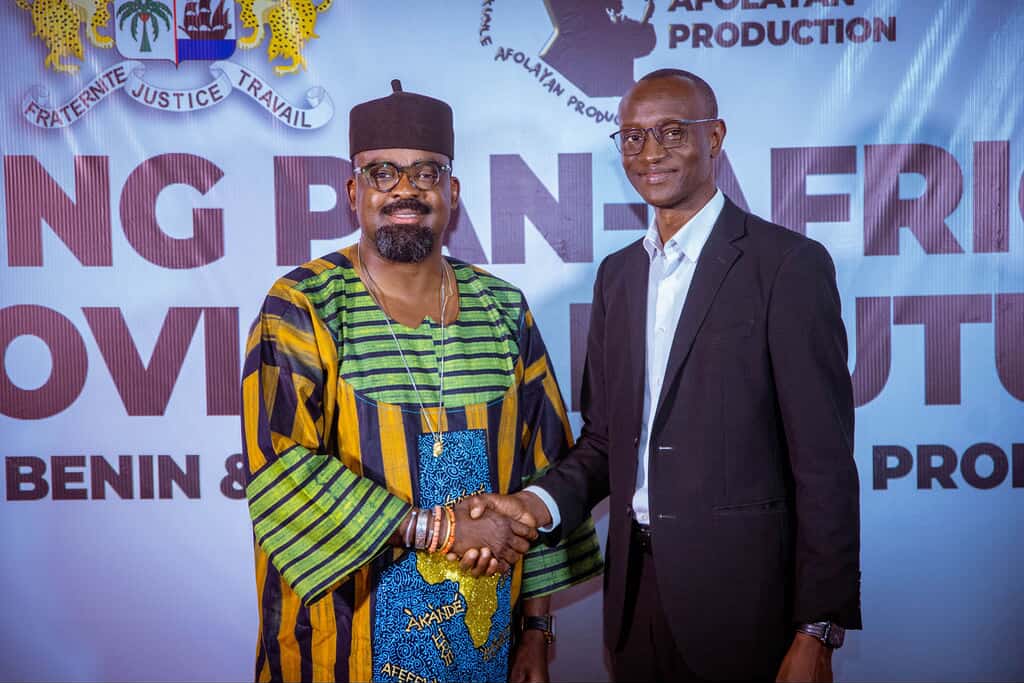
A few days ago, Kunle Afolayan put pen to paper on a head-turning deal by signing a partnership Memorandum of Understanding (MOU) with the Republic of Benin. Now, the question arises: “Is this just another ceremonial handshake?” We must ask what it really means.
On the surface, this deal is about influence, economics, culture, and the future of regional storytelling in West Africa.
To start, this MOU represents a pivot from national filmmaking to a regional strategy that many have discussed, but few have executed. For years, Nollywood has dominated African cinema in terms of volume, reach, and global visibility. However, the industry has largely operated within Nigeria’s borders. Afolayan’s MOU signals a move from national dominance toward true regional expansion.
An MOU is not necessarily a binding contract, but it outlines shared goals and cooperation frameworks. While the granular details remain private, if they include co-production agreements, location access, talent exchange, and shared technical support, it is a game-changer. We are witnessing the seeds of a “West African Free Trade Zone” specifically for cinema—a legal framework for more affordable filmmaking across the continent. This positions Afolayan not just as a filmmaker, but as a creative diplomat expanding Nigeria’s cultural footprint.
It is no coincidence that Nigeria and Benin share deep historical ties, particularly through Yoruba communities that span both borders. This shared heritage creates fertile ground for authentic cross-border storytelling. Benin Republic offers untapped filming locations, potential governmental incentives, and a gateway to the Francophone West African market. In return, Benin gains technical expertise and global distribution. It is a mutually beneficial creative alliance.
This MOU also signals that African governments increasingly recognize film as a primary economic driver. Globally, nations invest in cinema because it boosts tourism, creates employment, and enhances “soft power”—much like the success stories of South Korea, India, and Turkey. By signing this agreement, Nigeria and Benin are signaling their intent to claim a larger slice of the global media pie.
Afolayan, a legend who has consistently pushed high-production values through his KAP Film Village, is now thinking bigger: imagine bilingual productions that bridge the English-French divide; picture joint film festivals and regional training programs, and consider the branding dimension; Afolayan is positioning himself as an industry architect.
At a time when ECOWAS may appear politically fragile, Afolayan is spinning a yarn of unity. Cultural integration often moves faster than policy. Long before formal agreements, Nigerians were learning Hindi through Bollywood films and dancing to South African Amapiano. People love culture more than they love policy. Now, Nigerians have a tangible reason to learn French beyond the “Bonjour” and “Je m’appelle” of their school days. This means one thing: more jobs.
Film connects people emotionally, where politics often fails. In that sense, this MOU is a subtle but meaningful step toward West African unity through art.
However, we must temper excitement with pragmatism. An MOU is only as strong as its implementation. The real test will be concrete production announcements. Will there be clear timelines, visible training programs, and joint premieres? If tangible projects follow, this marks the beginning of a new era in regional African filmmaking. If not, it risks becoming mere symbolic diplomacy. We are waiting, and the world is watching.