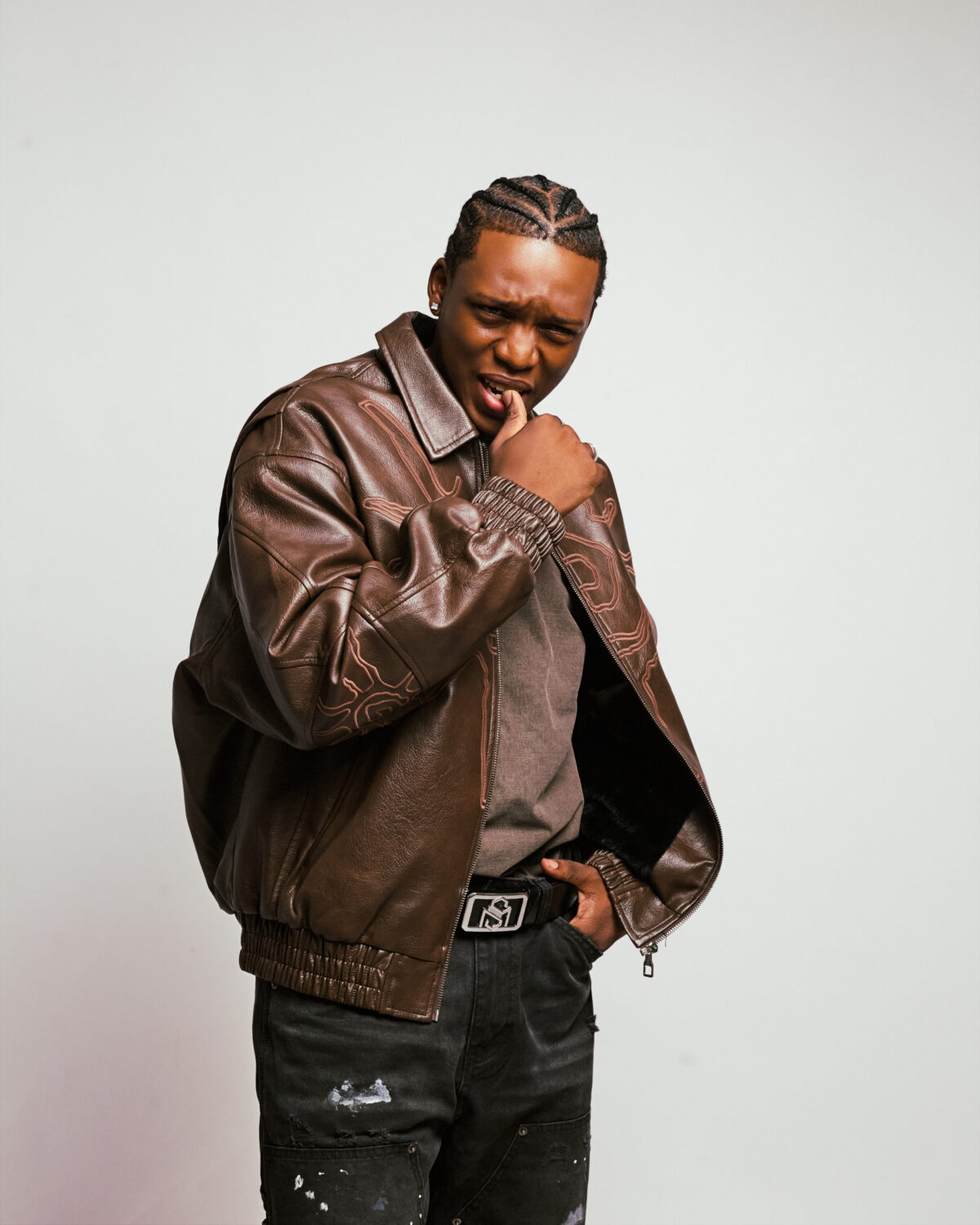
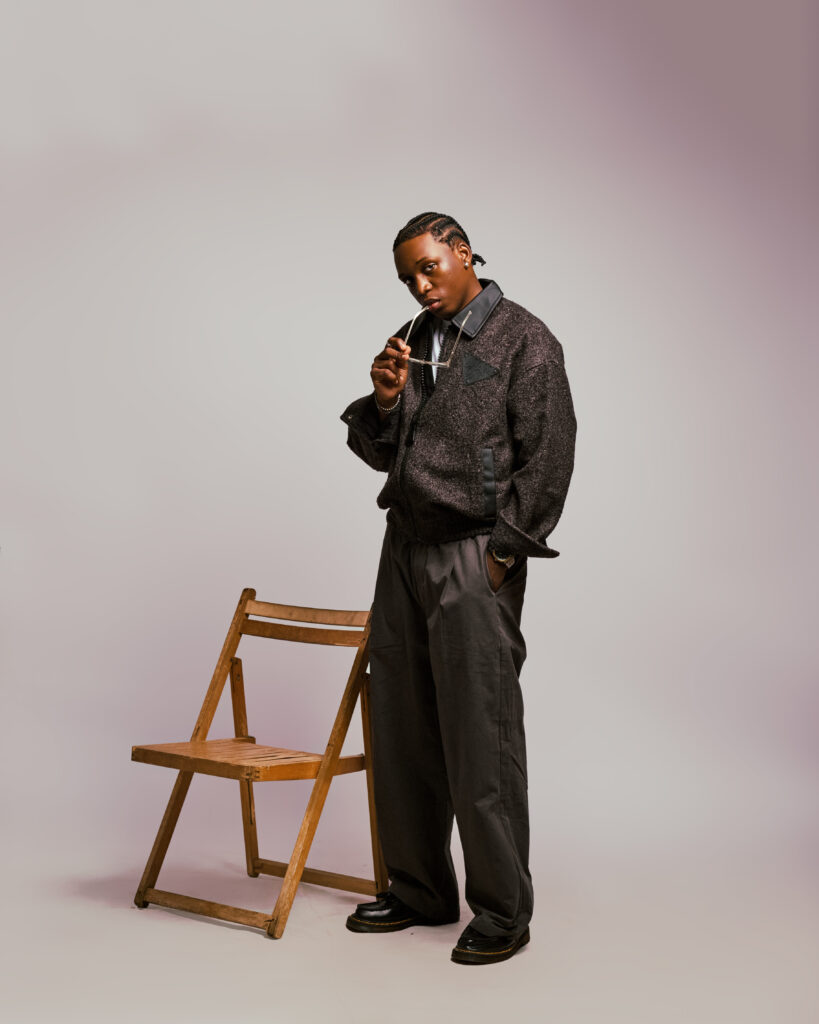
With several projects arriving around the same time, Adeoluwa Akintoba is enjoying a moment of increased visibility. But as he puts it, the work began long before audiences noticed.
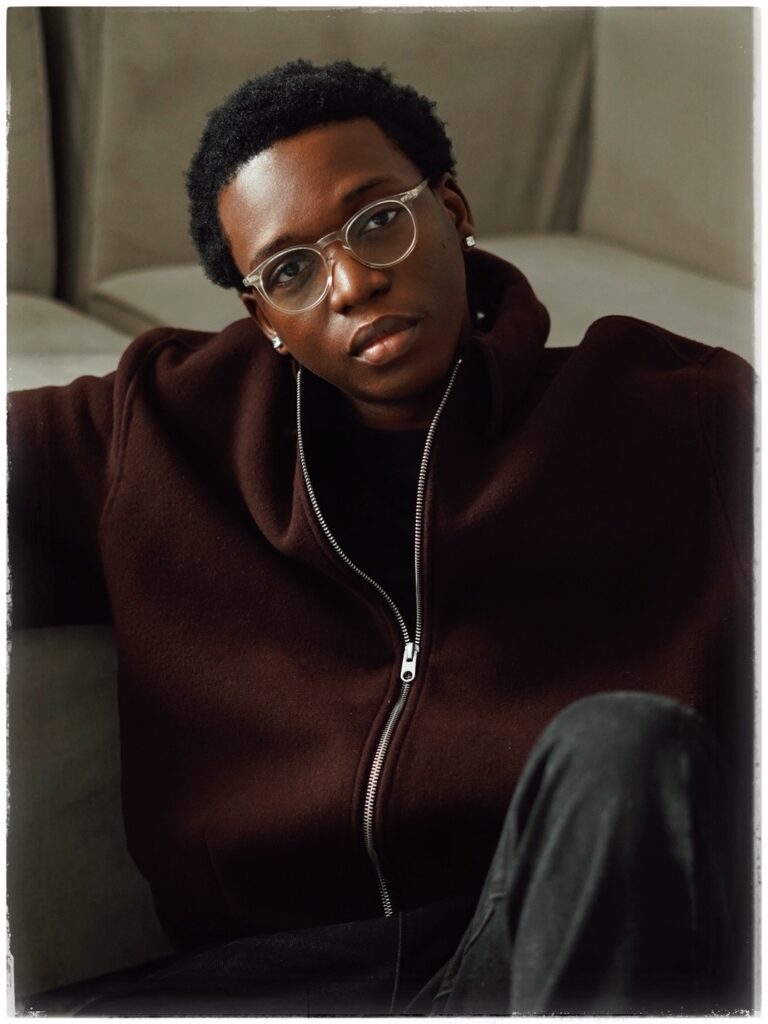
Adeoluwa Akintoba is having a moment. He would rather you did not mistake it for the whole story.
His route into acting was not entirely straightforward. After graduating from Babcock University, he worked as a radio intern at Beat FM Ibadan. When the station let him go during COVID-19, he turned his attention to cinematography and editing. In 2020, he auditioned for Niyi Akinmolayan’s Prophetess, marking his entry into Nollywood. He has since appeared in productions including Sista, Leaked and Slum King.
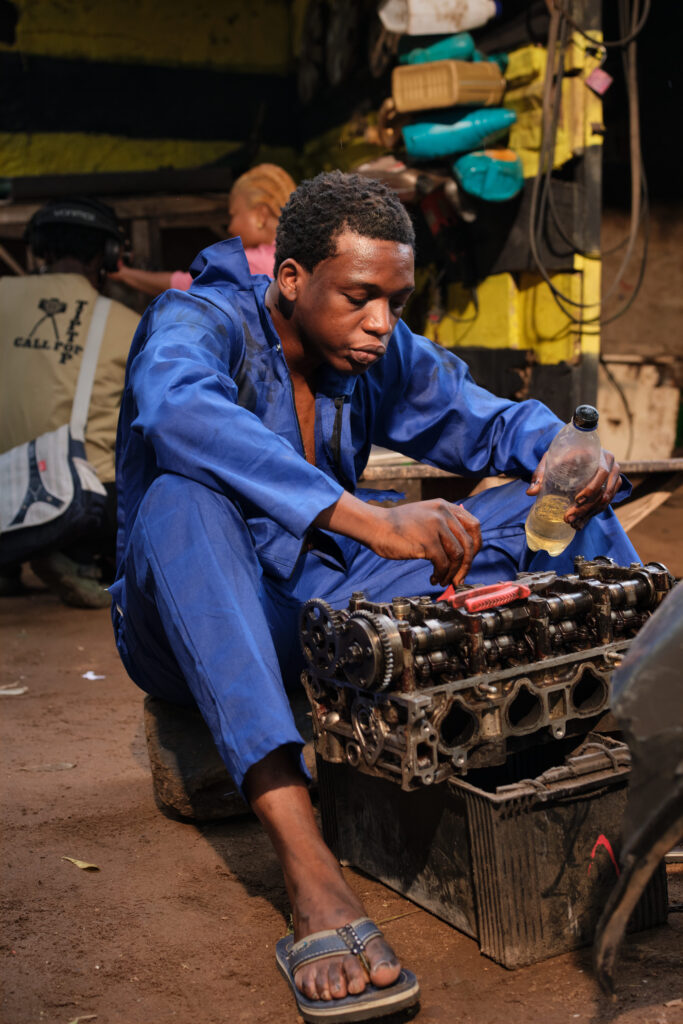
With Black Market, 19, Her Daughter’s Mother, and Tele X Zikora among the projects putting his face in front of audiences, the actor is enjoying a run that has attracted renewed attention.
Akintoba understands the excitement. But according to him, he has been here before.
“When I started, the first one I kind of had (run of releases) was in 2023,” he says, recalling a period when Tiger’s Tail, MTV Shuga, and Sista reached audiences across different platforms. This current run follows a similar pattern. Some of the films audiences are watching now were shot last year; others were made earlier this year. Their release schedules have simply coincided, creating the impression of an actor moving from one project to another in quick succession.
For Akintoba, however, the more important story is what happens between the releases.
“I’m always making sure that even when I’m not acting, even when, like, quote-unquote, it’s a dry season, I’m getting myself ready for what the next step is.”
Visibility may come in waves, but the work cannot depend on them. There are scripts to read, characters to develop, skills to improve and decisions to make about which projects are worth accepting.
“I’m grateful for the run,” he says. Then, with the confidence of someone who sees the current moment as part of a much longer plan, he adds: “Let’s just say there’s a cinema landlord coming to town.”
It is a playful declaration, but Akintoba is serious about the ambition behind it. He says Timini Egbuson’s self-styled title of cinema landlord was one of the things that pushed him when he entered the industry.
“If Timini can do it, I could obviously do it and even better.”
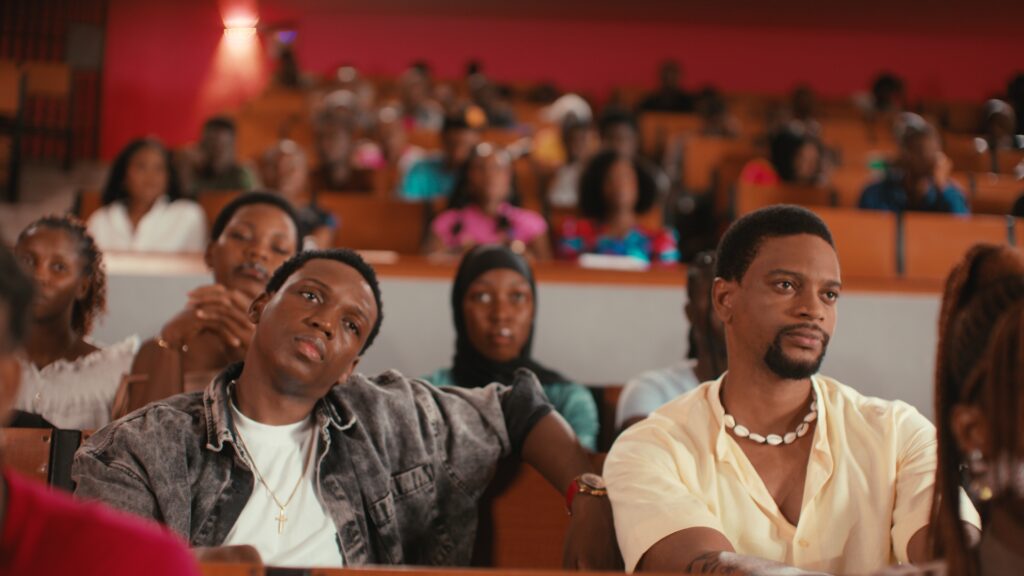
An Actor Prepares
Akintoba developed his understanding of preparation during the quieter periods of his career, when opportunities were less frequent, and there was no guarantee the next call would come when he needed it.
“It’s honestly, I would say, preparation during the seasons when I wasn’t getting a lot of jobs, when producers weren’t calling.”
The metaphor he uses for those periods isn’t gentle.
“I was working on myself, working on my acting muscle, working on basically getting prepared to go to war.”
He has since developed a work approach that begins well before he arrives on set. When two projects require him to play different characters within a short period, he reads both scripts ahead of time and works out the characterisation for each. The goal is to ensure one character doesn’t slip into another.
Rest matters, too, although production demands don’t always make it easy. He recalls finishing a shoot at 6 a.m. and, on another occasion, having to report to a different set by 9 a.m. He was the first name on the call sheet for the second production.
“I don’t just want to be in a film for film’s sake,” he says. “The film has to speak to me; it has to speak to the audience.”
He also recalls taking an extra role once because he needed a quick ₦20,000. He says he has not done another extra role since and was even uncertain if the film was ever released
“The goal isn’t just Nigeria,” he mentions. He wants to be considered for productions in India, Canada and Hollywood. His ambition is international, but he understands that the decisions that might take him there begin with the work in front of him.
“If the story is good and the money is not worth it, I will be there,” he says. “I will push it with all of my might.”

What the Work Demands
Approaching a career with such deliberate choices comes at a cost, and Akintoba does not pretend otherwise.
“I’ve sacrificed relationships,” he recounts “I’m not even going to lie to you.”
He speaks of the personal compromises that have accompanied his pursuit of acting: money that could have gone towards branding, disagreements with his parents, late nights, difficult auditions, and times he has cried. There have been occasions when he could have gone out to have fun but chose to stay indoors, read a script or watch an acting masterclass instead.
“Not like I don’t know how to have fun, but, like, the fun will eventually come.”
Some of his earliest on-set experiences also shaped his expectations of the industry. He remembers finishing a production around 2 a.m. in Ajah, without a straightforward way to get home. In his head, he remembers thinking: “God, this thing has to pay off. Like, this thing has to pay off.”
The memory carries the weight of an early-career calculation: how much can a person give to a pursuit before they begin to see results? Akintoba’s account includes the discomfort of uncertainty, the frustration of chasing payment and the difficulty of insisting on being treated properly. He also recalls standing his ground over how he was treated on a set, only for his payment to be withheld after the production had wrapped. He had to follow up again and was eventually told the payment had bounced back, something he says he wasn’t informed about.
Such experiences have made him more deliberate about the questions he asks before committing. What is the plan for the film? Where is it going? Does the story justify the time and effort required? He also understands that not accepting every opportunity has challenges. Acting is his main source of income, although he has worked across costume design, social media management and content creation.
“If you say you’re going to be saying no to a lot of things, you have to be ready to go hungry,” he says.
An Actor Evolves
Beyond securing roles and building a sustainable career, Akintoba has a roadmap for how he wants audiences to see him evolve as an actor.
For now, he is willing to make the most of roles that suit his youthful appearance: someone’s son, someone’s brother, the younger man in a story. He has complained to his manager, Lord Tanner, about being offered so many of these roles, but he also understands the value of allowing an audience to watch an actor grow.
“For the next one to two and a half years, I’ll keep on doing someone’s son, someone’s brother,” he says.
By 2029, he hopes the transition will be visible. He wants audiences to recognise that they have watched him move from one stage of life into another, eventually taking on roles as a father or a serious husband.
There is a plan; however, it is not rigid.
“Should I be given a character that, you know, needs me to age myself up? I will do that,” he says. “I won’t limit myself because of the roadmap that I’ve built in my head.”
Akintoba distinguishes between an actor and a superstar. A superstar can bring audiences to a film because people already know and love the person on screen. An actor, however, must also be able to disappear into a character, allowing audiences to see someone beyond the familiar personality. For him, that is a missed opportunity. He points to the surprise audiences expressed at seeing Itele D Icon play a quieter character in Black Market, rather than the louder personality they might have expected.
“That is an act; that is what it means to be an actor,” he says. “To be able to morph into roles and leave the audience guessing.”
Bringing the Stories Home
Beyond his own career, Akintoba is particularly interested in the stories Nigerian young adults get to see. He remembers looking up to characters like Troy Bolton in High School Musical and Sharpay Evans, and wanting to be like the people he watched on screen. He wants young Nigerians to have a similar relationship with characters who inhabit their own world.
“There’s a huge gap with our young adult stories,” he says. “So I want to be able to be at least one of the few people to bridge that gap when the time comes.”
He has already worked on a mini vertical series centred on young adults and relationship dynamics in Lagos.
“Why can’t we bring it home?” he asks.
The ambition is personal, but he has also seen how such representation can influence someone else. At a premiere, he recalls, a secondary school student approached him and said he had loved Akintoba’s character in a film so much that he wanted to pursue acting.
“That spoke so much to me,” he says. “Because it just was one of the things I’m always looking out for when I’m doing this job.”
Creating Greatness
When asked what he wants people to take away from the conversation, Akintoba returns to the idea of legacy.
“The goal is not to live forever; it’s to build something that outlasts you,” he says.
He wants the recognition, certainly. He wants the international opportunities and the chance to work alongside actors he admires. But the ambition is larger than being seen. He closes with another thought, one he says he wants to live up to: “Everyone can play what someone else has made, but someone must create what the world deems great.”
Then he makes his intention plain.
“And I want to be the someone who creates what the world has deemed great.”
Written by Aaron Ayo Akinyemi
Interview by Rotimi Feyisayo Guidiance