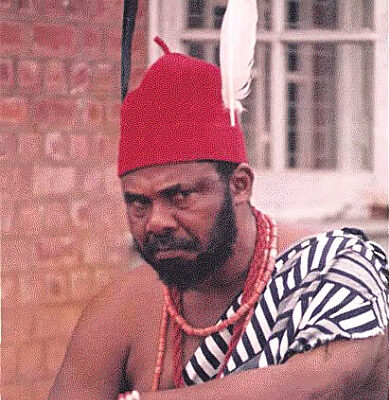
When I think about Pete Edochie, I think of thunder. A deep, unhurried rumble that quiets a room without ever needing to rush or shout. It was a voice that carried the weight of an entire lineage and refused to bend, leaving you feeling as though you were standing before an elder who already knew the end of your story before you opened your mouth.
On November 25, 2026, at 12:30 a.m., that voice stopped in Enugu. Chief Pete Edochie, MON, passed away at seventy-nine after a long fight with prostate cancer, according to his family. Almost sixty years of work, spanning radio booths, living room TVs, and phone screens, came to a quiet halt. You watch a man carry that kind of presence for decades, and you start to believe he will always be there.
Long before the television cameras, a boy was growing up in Zaria, in northern Nigeria, with no way of knowing that an entire continent would one day know his voice. Born on March 7, 1947, to parents from Akamnato, Ifite Nteje in Anambra State, he grew up in the North, attending primary school in Zaria before moving on to St. John’s College in Kaduna. At fifteen, he stepped onto a school stage in The Merchant of Venice and found out what his voice could do to a room. At that age, most kids are still working out who they are; he was already learning how to hold space.
He finished school in 1964 and followed his father into a clerical job at the Nigerian Railway Corporation. You can almost see him staring at rows of files, feeling that quiet restlessness in his bones. In 1967, he left the railway to join the Eastern Nigeria Broadcasting Corporation as a junior programmes assistant.
The Nigerian Civil War began in July 1967, bringing real fear, hunger, and daily chaos. Edochie and his future wife, Josephine, worked with the Voice of Biafra during the war. Broadcasting while everything around you is falling apart takes a different kind of nerve. After the war, and after training in England and at the BBC in 1980, he moved up through the Anambra Broadcasting Service. People knew his voice from classical shows like Music from the Masters. He became Director of Programmes, Deputy Managing Director, and in 1987, founding director of ABS 3 FM Stereo in Enugu. He built radio stations and ran programmes, but with his wife’s encouragement, he eventually left broadcasting and turned to acting.
In 1987, a former colleague, G. C. Ugwu, put his name forward for the Nigerian Television Authority’s adaptation of Chinua Achebe’s Things Fall Apart, and he was cast as Okonkwo. When it aired, he fully inhabited Achebe’s proud, doomed warrior through his posture, his jaw, his deliberate pauses, and the sheer pride that breaks a man. The BBC sent a delegation to Nigeria to interview him about his portrayal.
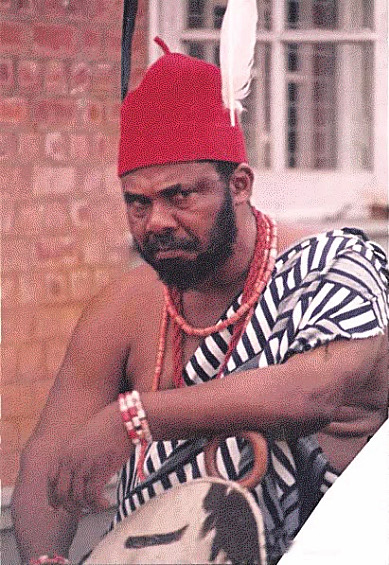
When Nollywood arrived in the early 1990s, he joined it. As home videos took over through the 1990s and 2000s, Edochie left a ₦9,000 monthly radio salary for early film fees starting around ₦50,000. The jump was large, and early Nollywood moved fast and loose, yet he stepped right into it. Across more than a hundred movies, including Rituals, Igodo, Billionaire’s Club, Egg of Life, and later Genevieve Nnaji’s Lionheart, he became the definitive face of the Igwe, the titled elder, and the ruthless father. Whenever a story needed a king who wouldn’t blink, a father whose word was law, or a man whose anger felt old, directors called Pete Edochie. A single look from him could carry what a whole scene of dialogue might otherwise need.
He was admired for delivering traditional proverbs naturally, a skill that helped define his characters. In the mid-2000s, film marketers placed him under a one-year ban, alongside Genevieve Nnaji, Omotola Jalade-Ekeinde, and Richard Mofe-Damijo, amid disputes over appearance fees and working arrangements. The industry pushed back because audiences actually wanted to see him, and people bought films simply because his face was on the cover.
Years later, that same face stayed familiar even after the format that made him famous had faded. The VHS generation knew him as a strict judge in the sitting room, the kind of presence that made everyone quiet down like you were the one who did wrong. Decades later, younger fans on X, TikTok, and WhatsApp turned clips of him slowly adjusting his red cap or pausing mid-proverb into reaction memes. Even people who never watched a full VCD from start to finish knew his voice and recognized the exact clip to drop in a group chat when someone was about to say something foolish. Even after endorsing the Wikimedia campaign in Nigeria in September 2017, he never chased the internet; the internet kept coming back to him.
Across seventy-nine years, he stood steady through hard times. Off screen, his life was anchored by his Catholic faith and his marriage to Barrister Josephine Edochie, which lasted fifty-seven years. They were married on March 19, 1969, at St. Finbarr’s Catholic Church in Umuahia. Together they raised six children, with Linc and Yul stepping into acting after him. Even when trouble hit, whether being kidnapped near Onitsha in August 2009—before being released unharmed—or enduring relentless public scrutiny over his family’s private life, he kept his head up. Even amid that scrutiny, he retained the measured manner audiences associated with him.
Over two decades, institutions formalized what audiences already knew, starting with his 2003 conferment as Member of the Order of the Niger (MON) and continuing with lifetime honours from the Africa Movie Academy Awards, an Industry Merit Award at the Africa Magic Viewers’ Choice Awards in 2014, and the African Film Legend award at The African Film Festival in 2020.
Two months before he died, shortly after Olu Jacobs passed away in September 2026, Edochie paid tribute to his late colleague in a video. Something must kill a man, he said, and he hoped to meet his friend again. Looking back on it now, it’s hard to hear without feeling it. Two months later, he was gone at seventy-nine. When his first son, Leo, announced his passing under the words “An Iroko Has Fallen,” there was nothing left to add. The echo remains, even after the voice goes quiet: the end of a giant, and the fall of an Iroko tree.