
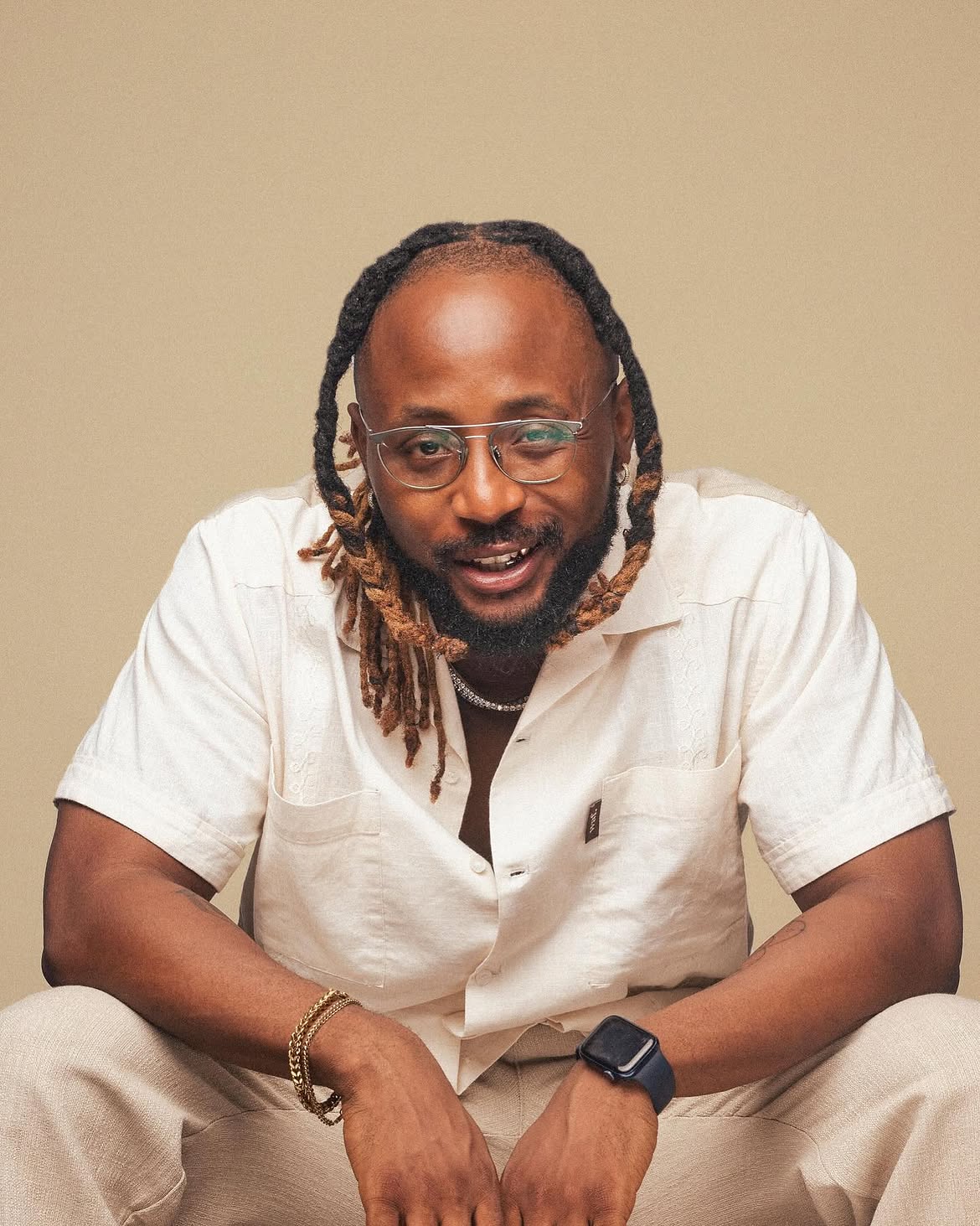
After spending almost two years in post-production, Dare Olaitan is back in cinemas with Alahun: The Weaver, a Yoruba epic adventure and romance rooted in Yoruba culture. The film follows a young weaver mocked for making baskets and plaiting hair in a society with rigid ideas about masculinity.
When a princess disappears and his kingdom is threatened, he must journey through mystical worlds to find her and save his people. The same abilities people laughed at him for may become the tools he needs to survive.
In recent years, Nollywood has witnessed growing interest in indigenous stories drawn from Yoruba folklore, mythology and fantasy, through films such as King of Thieves, Jagun Jagun, Aníkúlápó, and Òrìṣà. These films reflect an industry returning to its cultural roots.
The heroes in these stories are often warriors, kings or men defined by physical strength, spiritual authority and destiny. Alahun takes a different route. Its hero is a weaver whose craft is considered unmanly and whose father expects him to become a warrior.
The film raises a simple question: What if strength is not defined by what a man holds in his hands, but by what he chooses to do with his abilities?
Olaitan developed the story across nine drafts before filming it over three weeks in August 2024. The film then spent almost two years in post-production, with more than 400 visual-effects shots completed during that period.
In this interview with OYA Magazine, Olaitan discusses the folktale behind Alahun, why he made a weaver his hero, the ideas about masculinity and fatherhood within the story, and the long process of bringing the film to cinemas.
This interview has been lightly edited for clarity and length.
Alahun is finally in cinemas after several years of work. What does it feel like to release it to audiences?
It feels like giving birth to a baby that has been gestating for too long. I’m very happy to have completed it and gone through the process. Every step was important and necessary, but we finally got here, so I’m happy.
You said Alahun was inspired by a folktale you heard as a child. What do you remember about it?
The folktale is the story of Ori and Olajumoke. Olajumoke is a beautiful maiden. Every suitor comes to ask for her hand in marriage, but she tells them that none of them is beautiful enough. Then, one day at the market, a really beautiful man named Ori appears. Everyone is drawn to him, and she decides that this is her man. She does not tell her parents anything. She simply follows him home.
As she follows him, he asks, “Why are you following me?” She tells him she loves him and is ready to go anywhere with him. He comes from a very distant place, but she insists on following him. He warns her to remember that he did not force her.
When they enter the forest, he begins returning the body parts he borrowed. He removes his hands and leaves them on a tree. As they continue, he returns the other parts until only his head remains. That story always stayed with me. In the end, a hunter saves Olajumoke, and she has to marry him instead of all the suitors she rejected. I took the story, remixed it with my own themes, and that became Alahun.
You also cited Angélique Kidjo’s Agolo as an influence. How did the song shape the film?
The first time I heard about the folktale was through Angélique Kidjo’s Agolo. I heard the song when I was young and asked the adults around me what she was singing about. They knew the story, and that was how I discovered it.
The song did not necessarily unlock something creatively. It was the spark that brought the story to me. I also grew up watching Tales by Moonlight, and I wanted to tell a story with that feeling: a story with lessons, but also a journey and an adventure. That is not something we get to see often in Nollywood.
Why did you make a weaver the hero, and what does his craft represent within the story?
In this world, many assumptions are made from what people see first. The original folktale is about the assumptions Olajumoke makes when she sees a man who is beautiful on the outside. I wanted to expand that and ask what other assumptions society makes.
In Alahun, the protagonist is a weaver born to the greatest warrior in his town, but he lives with sickle cell. His father expects him to become the person he wants him to be, but he cannot. The story asks whether there are other forms of strength beyond the stereotypical idea of what strength looks like on the outside.
The protagonist is mocked for weaving baskets and plaiting hair. What ideas about masculinity and strength were you exploring through him?
The important thing is that ideas and preconceptions are not always reality. Because people say something does not make it true. You may be Nigerian, but that does not mean you are a Yahoo boy. We should take people for who they are instead of stereotyping them based on expectations.
What informed your decision to cast Moshood Fattah as Alahun, and what made him right for the role?
The most important thing was finding somebody who could embody quiet strength. He had to seem physically weak at times while still projecting strength. I saw him in a stage play, and he was very good. I decided he was the right person for the role.
How did fatherhood, legacy and choosing one’s destiny become part of the story?
In everything you make, you try to pull from your own life. There are assumptions about who we are meant to become and what we are meant to do. If your father is a lawyer, people ask why you are not becoming a lawyer. If your father is a doctor, they expect you to become a doctor too.
I wanted to examine that expectation, which is very prevalent in Nigeria. It does not only come from fathers. It can come from family and from other people around you. Just because someone followed a particular path does not mean you have to follow the same one.
Which Yoruba myths, traditions and historical practices influenced the film’s world?
The influences came from stories I heard growing up and in secondary school, including stories about spirits you could encounter and become rich if you took something from them. Those things stayed in my head, and I knew that if I made a Yoruba film, I wanted to put some of them into it. It is fiction, and I also drew from some Greek mythology.
The screenplay went through nine drafts. What changed most between the first draft and the film you eventually shot?
At first, I simply wanted to tell a Yoruba adventure story. With each draft, I tried to reconnect it to something that felt more personal to me. That was when I remembered the Agolo song and everything around it.
When you are making a film, it can feel like you are extracting it from your mind. Each draft was another attempt to get closer to the source idea.
What was the most challenging scene or day of filming?
Everything on this film was challenging. We were shooting a Nigerian film, which is already difficult, and we were also making an epic. We were always on location. Sometimes we were under the sun; sometimes we were shooting at night, surrounded by mosquitoes and bugs. There was no easy part.
What made it rewarding was that everyone believed in the story. Our job is about bringing people together, and it is exciting when everyone buys into an idea on the page and helps bring it to life. Everything was hard, but everything was worth it.
The film was shot in three weeks but spent almost two years in post-production. Why did post-production take that long?
We shot the film in three weeks because, in Nigeria, you cannot take too long to shoot. Every additional day increases the budget. We also filmed at Ibrahim Chatta’s film village, which was expensive because we rented the entire place while other people also needed to use it.
The film has more than 400 VFX shots, including shots where viewers may not even notice the visual effects because we were hiding things in the sets. To achieve photorealistic VFX that would work for the film, we had to take the necessary time.
When I was at film school, a friend worked on an Avengers shot that lasted only about two seconds in the finished film. Around 50 people worked on that single shot. Good VFX requires a lot of money, time and people. We do not always have those resources in Nigeria, so I had to stretch the time to get the best possible VFX, sound, colour and overall finish for the film.
You described Alahun as a film about your own life. Which part of you is reflected in the protagonist?
In Nigeria, there are many expectations about who we are supposed to be. Nothing in my early life prepared me to become a filmmaker. I studied economics and business at university, and after completing my first degree, I decided filmmaking was what I wanted to do with my life. When I first announced that decision, people reacted as though something was wrong with me.
That experience is part of the film. You can become what you want to become. Your life does not always have to follow other people’s expectations. Some very specific Nigerian pressures that can be difficult to explain to somebody who is not Nigerian, and I wanted to capture a feeling Nigerians would understand.
You and Kayode Kasum have worked together for several years. What makes that partnership work?
Making films in Nigeria is incredibly hard, so it helps to have people who share your vision. It is even better when they are your friends. Kayode and I have been good friends for about six years. When he makes a film and I can assist, I assist. When I make a film, and he can assist, he assists. We are lucky to have each other’s backs in that way.
Why was a cinema release important for this film?
Films are meant to be experienced first in the cinema. There is nothing like watching a film with other people in the dark. I had watched Alahun hundreds of times, but at the screening, I watched it with an audience for the first time. The emotions felt different. People were reacting and making jokes. There is a feeling that comes from watching a film together. The cinema gives you that shared experience.
What else would you like readers to know about Alahun?
Most importantly, it is a very intentional film. A lot of care went into making something Nigerians can take from it. I have been making films for about a decade now, and I believe I have become more focused and better at my art.
I hope Nigerians give the film a chance because there is something in it for everyone: women, men, parents and children.
As a Nigerian filmmaker, what challenges have you faced, and how have you navigated them?
The challenges I face as a Nigerian filmmaker are the same challenges most Nigerians face in every area of life. We live in a country where many people are struggling to survive. It is difficult to invest in art, make art or get people interested in art when they are worried about security and survival. The problems I face are the same problems you face. None of us is special.
What advice would you give an emerging filmmaker working in the industry today?
The best thing I can say is to keep making work. Stories communicate, and you need to make something that can reach somebody and give you the opportunity to create on a larger scale.
Also, keep working horizontally. You might not be able to get the attention of Kunle Afolayan or Jade Osiberu, but you can get the attention of the best people around you. Work together and keep growing. One day, you will be in a position to make your own decisions and create work on your own terms.
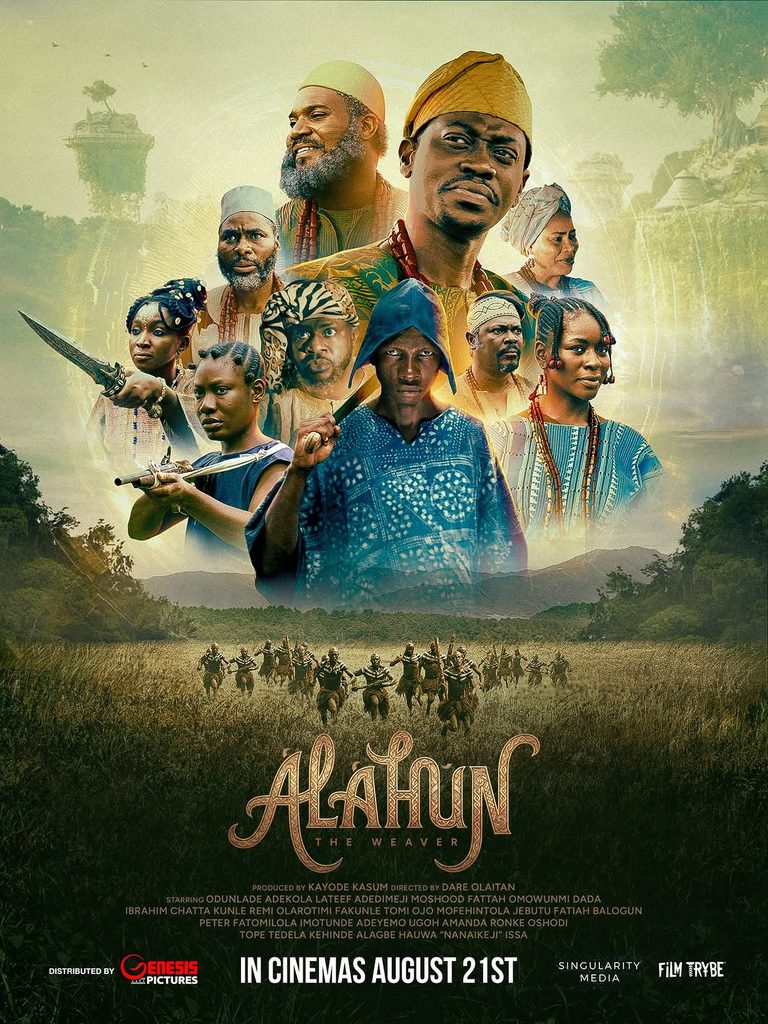
Alahun: The Weaver stars Odunlade Adekola, Ibrahim Chatta, Lateef Adedimeji, Faithia Williams, Kunle Remi, Ronke Oshodi Oke, Peter Fatomilola, Omowunmi Dada, Tope Tedela and Moshood Fattah, among others.
Directed by Dare Olaitan and produced by Kayode Kasum, the film is a production of Genesis Pictures, Singularity Media and FilmTribe Media. Alahun: The Weaver is currently showing in cinemas nationwide.




















[…] this interview, Olaitan discusses his influences, the process, and all the effort that went into making this film; […]
[…] is not meant to be a parent’s replica. Olaitan also discussed these family expectations in his interview with OYA Magazine. They are meant to become themselves, carrying what is good from those who went further than they […]