
On Friday, September 12th, Filmhouse Cinemas Nigeria premiered the new Demon Slayer: Infinity Castle movie across various states, answering the call of anime fanbases that had been eagerly awaiting its release. By Monday, September 15th, the film had already made waves, topping Nigeria’s weekend box office with ₦82 million in sales and setting a new presale record; however, the real story goes beyond the numbers.

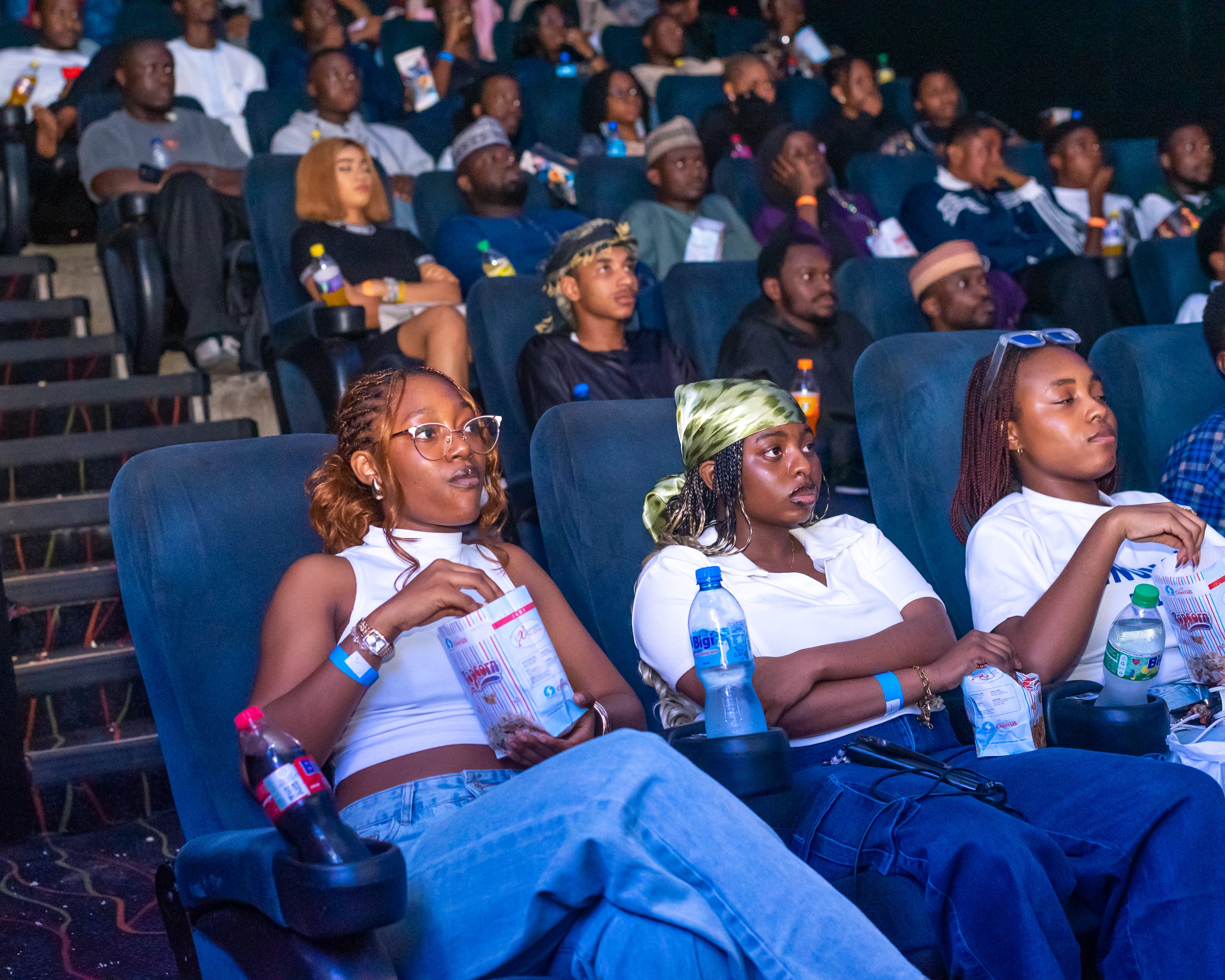
From Benin to Lagos, Ibadan, Akure, and Abuja, anime communities transformed ordinary screenings into cultural events. The Aniwe Community hosted dual watch parties in Lagos and Abuja that drew awe-inspiring numbers, while the Official Otaku Hub Community converged in Ibadan with equal energy. Across the country, Otakus showed up in force, transforming theaters into hubs of celebration, connection, and creativity.
In an exclusive statement, Omotanwa Gbadebo, founder of the Aniwe Community, spoke on the rise of anime culture:
“I think the biggest influence has been the rise of communities and events like AniWe Convention, AniWe Xchange, AniWe Watch Party, and AniWe Village. They’ve given fans a place to come together, connect, and just be themselves without fear of judgment. People can share their creativity, meet others who love anime as much as they do, and feel part of something bigger. We’ve also seen a huge growth in cosplayers and influencers, who have made the culture more visible and exciting.”
At each screening, crowds of anime lovers—Otakus—lined up in numbers, many in cosplay, waving their anime props with pride. Even before the screen lit up, the energy was palpable, the love for the art form heavy in the atmosphere. It felt like an early Christmas, but only for these lovers of Japanese animation.
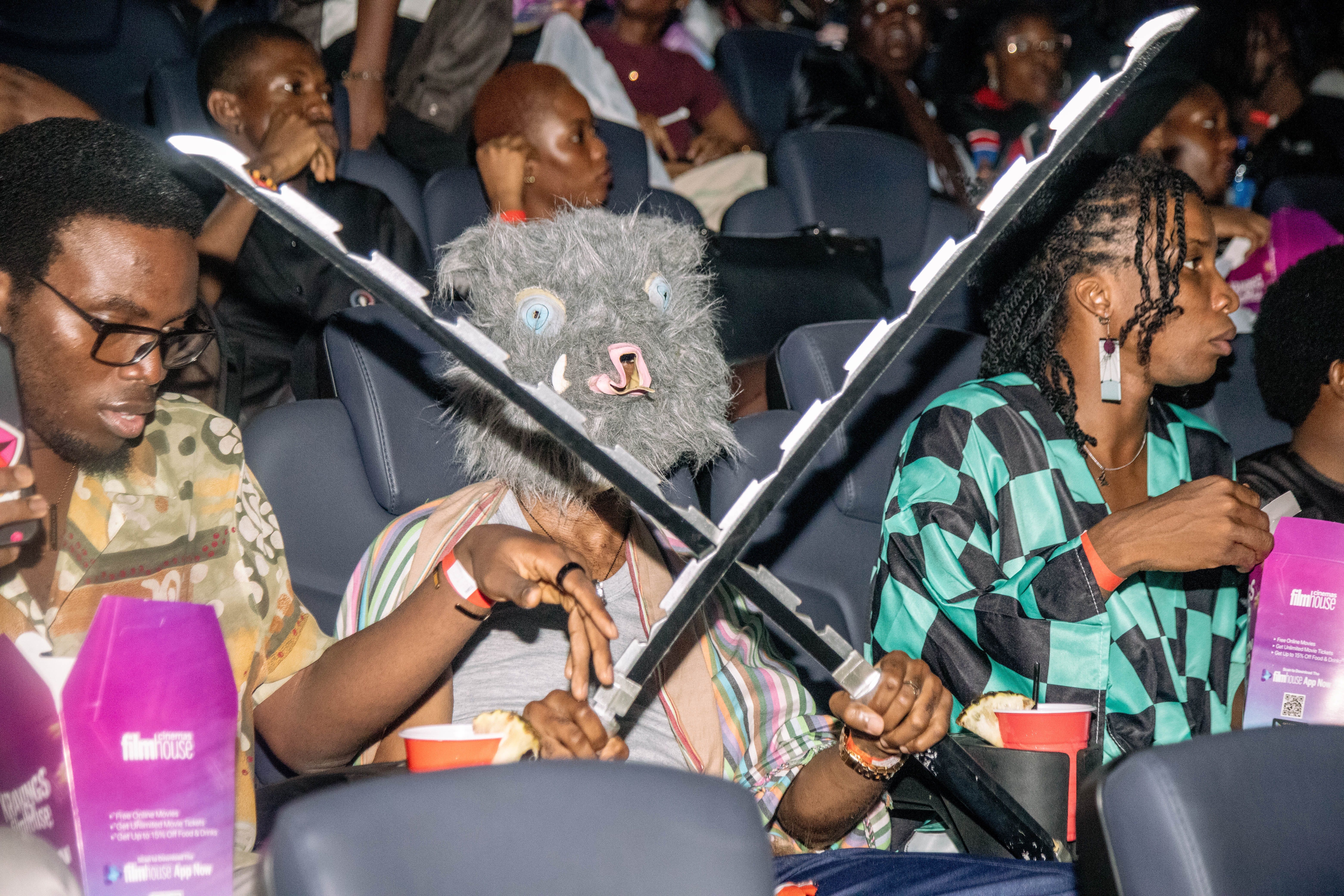
When the movie began, the cheers roared in sync with the soundtrack and didn’t let up until the final scene. With each beloved character’s entrance, the crowd erupted. With every burst of color and spectacle that Demon Slayer is famous for, the audience responded with a contagious affirmation. You couldn’t be in those theaters without raising your own voice. The electricity was a living ode to the power of animation, the beauty of fantastical battles, the clash of wills and temperaments, and most of all, the connecting power of film culture.
The beauty of a tradition lies not in its specific actions but in the mutual agreement of everyone involved to romanticize the rituals until they carry the weight of communal affection. The appeal of cinema is in its promise of escape and the privilege of encountering larger-than-life personas that inspire us, no matter how incredible or unrealistic they may seem. Put these together, and you create a world audiences can escape into, traditions they can uphold, characters they can emulate, and a shared love they can rally around.
Drawing a parallel between anime and Nollywood, Omotanwa Gbadebo offered a crucial insight:
“Anime has made people fall in love with Japanese culture, not just because of the art, but because of the powerful storytelling. For Nigerian producers, the key is to do the same with our own culture. We need to tell authentic Nigerian stories in ways that are creative, bold, and true to who we are.
It also means seeing what people are drawn to, connecting with the communities that already exist, and working hand in hand to create something original. If we can do that, I believe Nollywood can spark that same kind of excitement and loyalty that anime has built worldwide.”
The crowds at Filmhouse Cinemas across Nigeria serve as a signal to every producer, director, writer, and stakeholder who is willing to pay attention. Anime, by creating immersive storytelling experiences that matter deeply to Nigerians and Otakus worldwide, has managed to embody what many of its most iconic characters represent: an indomitable spirit that will never bend, no matter what.
Perhaps the question isn’t, “What stories can we tell that would merely dazzle audiences and the global film industry?”
Perhaps the real question is, “What stories do our people crave? Which stories would mean the most to them? Which stories would strike such a chord in their hearts that they’d gather their friends, don remarkable costumes, and line up in queues just to watch?”
At the end of the day, when an audience can truly escape into a world and fall deeply in love with a story, everyone feels it—just as Nigeria, West Africa, and the world did with Demon Slayer: Infinity Castle.
The lesson here is clear: the beating heart of cinema transcends distribution and box office numbers. It is community, culture, and story. Anime fans across Nigeria proved that when people see themselves in a world they love, they will show up with devotion and passion.
Nollywood is up next. The audience is ready. The question is whether the industry will rise to meet them.