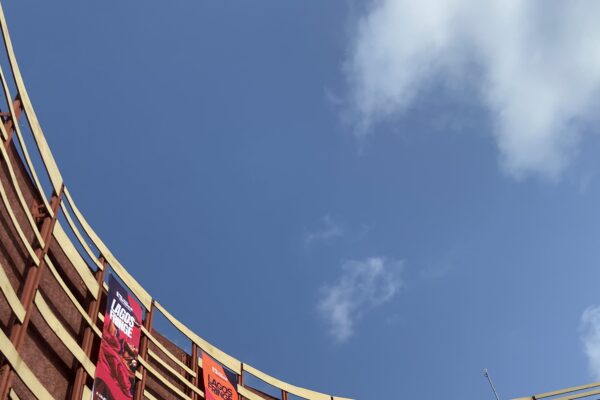
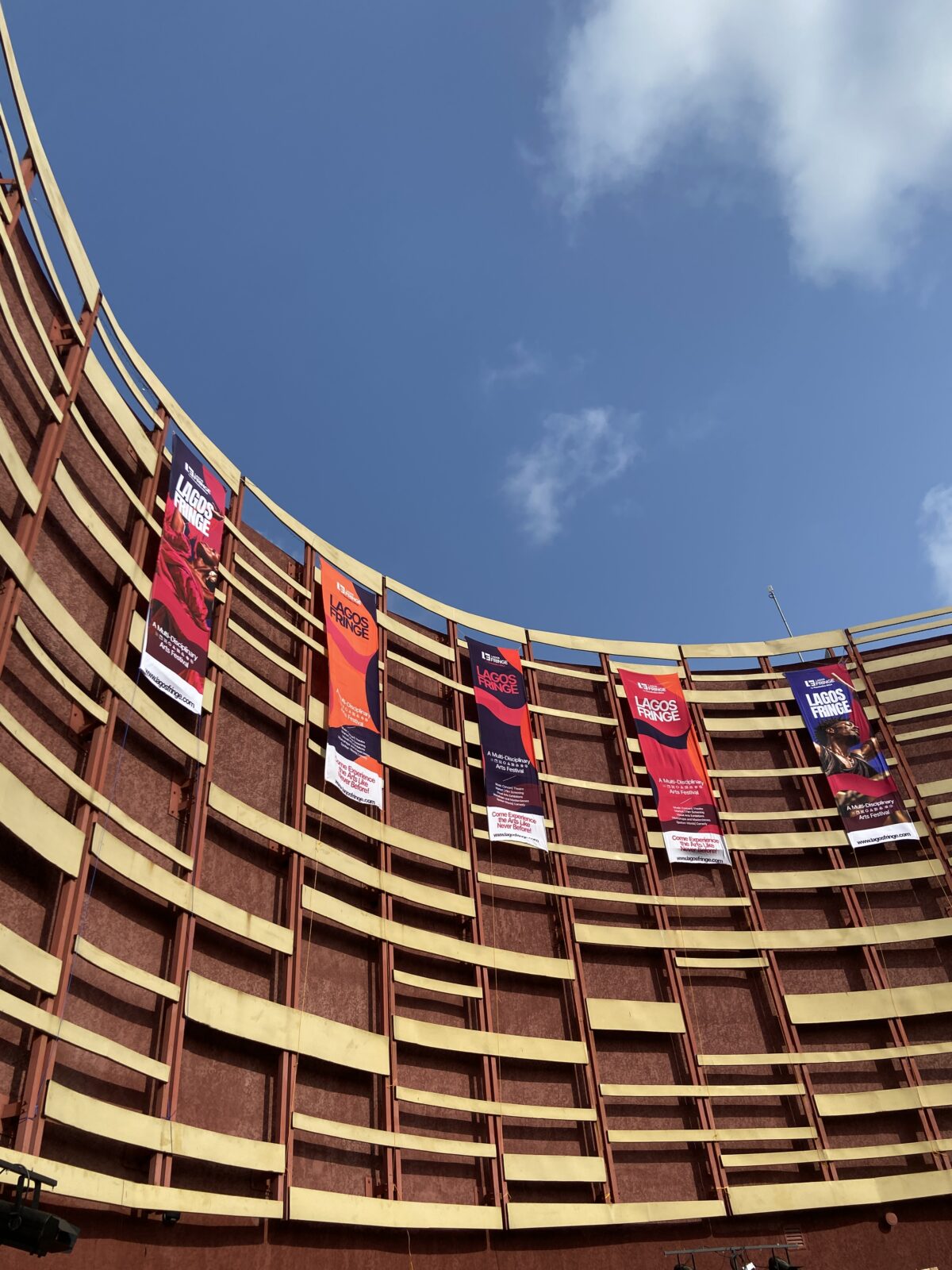
Founded in 2018 by Kenneth Uphopho and Brenda Fashugba-Uphopho under PAWSTUDIOS Africa, the Lagos Fringe Festival returned for its ninth edition from November 3 to 8, 2026, under the theme, “Let’s Play.”
Positioning itself as one of West Africa’s largest open-access, multidisciplinary arts festivals, Lagos Fringe continued its commitment to accessibility. General entry was free, although tickets were required for theatrical productions and some special events.
The “Let’s Play” theme shaped the rhythm of the week. Rather than the familiar Lagos experience of buying a ticket for one show and immediately battling traffic to get home, the programme featured overlapping performances and repeat runs. Audiences could wander between activities, grab a drink and put together their own routes through the festival.
A Festival Hub, Multiple Stages
Making the J. Randle Centre for Yorùbá Culture & History the festival’s principal hub was arguably one of the organisers’ best decisions. Its numbered spaces became familiar reference points for festivalgoers, with the Amphi Space (Venue 1), Forum (Venue 2), Collab (Venue 3) and Ideas Lab (Venue 4) hosting much of the theatrical programme. The British Council space also hosted performances, while Freedom Park and other locations accommodated selected activities.
Although the festival still used multiple venues, concentrating much of the programme around J. Randle made it easier for audiences to move between screenings, theatrical performances, and other activities without arranging transport across different parts of Lagos.
The Forum was particularly important for repeat theatrical runs. Tomorrow opened there on Friday at noon and returned for evening performances on Saturday and Sunday. Cut Beneath the Silence occupied the weekend afternoon slots, sharing the programme with There Is Rice at Home, while Put It on My Head began its run on Friday evening.
Theatre’s Difficult Conversations
Although the festival theme invited audiences to play, many of the theatrical productions went straight for some of the heaviest and most uncomfortable parts of everyday Nigerian life.
Grief and silence ran through much of the programme. Cut Beneath the Silence is a raw one-woman show about a twin who loses her sister to female genital mutilation at thirteen, then becomes a doctor and campaigner against the practice. It forces the audience to sit with a subject that is often difficult to discuss openly.
Tomorrow, an advocacy play about a couple who both carry the sickle cell trait, makes a case for genotype testing and premarital counselling. It is honest about the pain, exhaustion and social hurdles patients face, but sometimes leans too heavily on its message, trading subtlety for the lesson.
There Is Rice at Home is an intimate two-hander musical about death. Death appears as a character, refreshingly not as a villain, arguing that humans hasten their own end through greed and recklessness. This turn lifts the play into a wider indictment of accountability.
MENTALITY: What Don’t Men Say? focuses on the emotional weight men carry when they are constantly told not to show vulnerability. Put It on My Head examines how far someone will go for a life-changing opportunity, and who pays when things go wrong.
Love and marriage supplied much of the comedy in Efua Sutherland’s The Marriage of Anansewa, Where Is My Groom? and Closure Is for Wigs. Home and money were less forgiving in My Room My Doom and Ibi: The Unseen Evil. Greed and money drove the conflict in The Lottery Ticket, while Rite of Passage used humour to explore immigration. Social pressure came under scrutiny in True Colours, and Ijapa in Eko brought the classic Yoruba trickster tortoise into contemporary Lagos.
Stories in Different Tongues
The film programme added another dimension to the festival, with free public screenings at J. Randle and filmmaker Q&As afterwards.
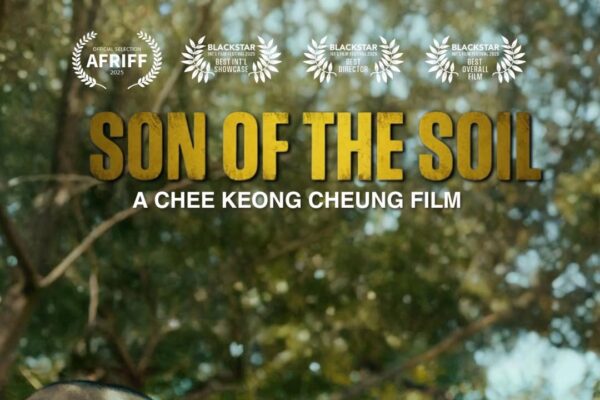
On Thursday, November 5, ten short films screened back-to-back from noon to 4:35 pm. The selection covered a range of subjects and forms: Seen, a psychological drama; The Nights Were Velvet, a Sesotho documentary; Black Sands, a Tiv conflict drama; and Voices in the Concrete, an animated film.
The programme also included Orúkọ: The Power of Names, a Yoruba documentary exploring the history and songs behind indigenous names, and A Nation of Brutality, which revisits the October 2020 protests.
Friday, November 6, continued with seven films screening from 3:00 to 6:25 pm. The crime thriller The Chain mixed English and Yoruba, followed by Our Side of the Bay, a one-minute micro-documentary in Pidgin. Art of Love told a romance through English and American Sign Language, while Bond of Tera brought supernatural suspense in English and Luganda. The day ended with the dark comedy In Search Of.
Across the two days, the films featured seven languages: English, Yoruba, Pidgin, Sesotho, Tiv, Luganda and sign language. The range gave filmmakers working in different languages and formats a place within the same programme, putting short experimental work alongside more conventional narrative films.
Where the Gears Frictioned
For all its organisational strengths, Lagos Fringe 2026 had some shortcomings worth noting. One was the disconnect between the emotional weight of parts of the theatrical programme and the atmosphere surrounding them.
Walking out of an emotionally demanding performance into a lively courtyard filled with Afrobeats, food vendors and casual conversations could feel jarring. The courtyard undoubtedly contributed to the festival’s communal atmosphere, but the transition from confronting difficult realities on stage to the celebratory mood outside was sometimes abrupt.
Audiences had little room between the two experiences to process what they had just watched. For some, the courtyard was a useful place to debrief; for others, it was too loud and too soon. A quieter holding area or slightly longer gaps between performances would have helped. The acoustics of venues weren’t also great for theatrical performances as the rooms echoed into the walkways.
The decision to concentrate much of the programme at J. Randle also came with an acoustic challenge. While having performance spaces close together reduced the need to travel across Lagos, the proximity of the theatre rooms to the open courtyard meant that activities outside occasionally found their way into performances.
Music, laughter and conversations from the food and vendor areas could be heard during quieter theatrical moments, disrupting the concentration required for some of the more intimate scenes. This mattered particularly for works that depended on silence, such as the one-woman Cut Beneath the Silence and the close-up performance Kissing.
Keeping the loudest courtyard activities away from performance slots, or improving the sound insulation of the venues, would go some way towards addressing the problem.
Artistic variety was another concern. With much of the theatrical programme relying on dialogue-heavy storytelling and intense monologues, the volume of text-driven performances could become demanding for audiences later in the festival.
For an event that describes itself as a multidisciplinary arts festival, the relative scarcity of dance and movement-based performances was noticeable.
This made Qudus Onikeku’s Terrapolis, performed by the QDance Company, particularly memorable. Its abstract choreography and high-energy physical expression offered something different from the dialogue-driven productions around it. More physical theatre, experimental movement and other non-verbal forms could have given the programme greater balance.
Beyond Theatre and Film
The festival’s programme extended beyond theatre and film to include performance poetry, music and other creative activities.
Kissing, a close-up, text-driven performance, was one of the earlier offerings. By Sunday, November 8, the festival was heading towards its conclusion with another packed programme of overlapping performances.
The Forum drew audiences for the final evening performances of Tomorrow and There Is Rice at Home, while Cut Beneath the Silence attracted its final afternoon crowd. At the same time, My Room My Doom took over the Ideas Lab (Venue 4) for its final 4:30 pm performance.
The theatrical programme unfolded alongside M. Rumbi’s performance, A Little More Indie. A Lot More B.S., at Collab. Live music also filled the gaps between film and theatre screenings throughout the week, giving the festival grounds a loose, organic backyard atmosphere.
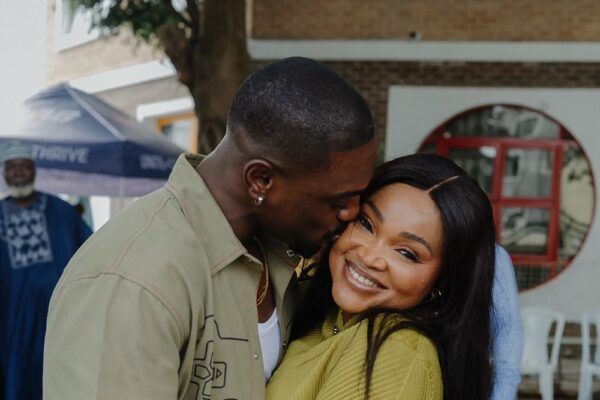
Away from the performance spaces, the courtyard felt like a typical Lagos creative hub at full volume. Local vendors set up stalls selling everything from custom Afro-fusion clothing to handmade candles and jewellery. Food stalls, smoking grills and pop-up cocktail bars kept the grounds busy between showtimes.
The setup encouraged people to stay for the afternoon rather than arrive for a single performance and leave. It helped make the festival feel like a community gathering, not just an event.
The Takeaway
The 2026 edition shows a festival that knows what it is. It pairs challenging theatre and independent films with the more casual atmosphere of workshops, markets and music. Having J. Randle as its principal hub also made it easier for audiences to move between activities without scattering across Lagos.
But a festival that knows what it is must now decide what it wants to become. Lagos Fringe has built a space where art and community meet; its next challenge is to stop them talking over each other. The festival needs to think more carefully about how its different artistic and social experiences coexist, rather than simply adding more activities or adjusting the schedule.
Lagos Fringe 2026 proved that you can hold a mirror up to the hardest parts of Nigeria and still throw a great community festival. The challenge now is making sure people can hear what the mirror is saying.