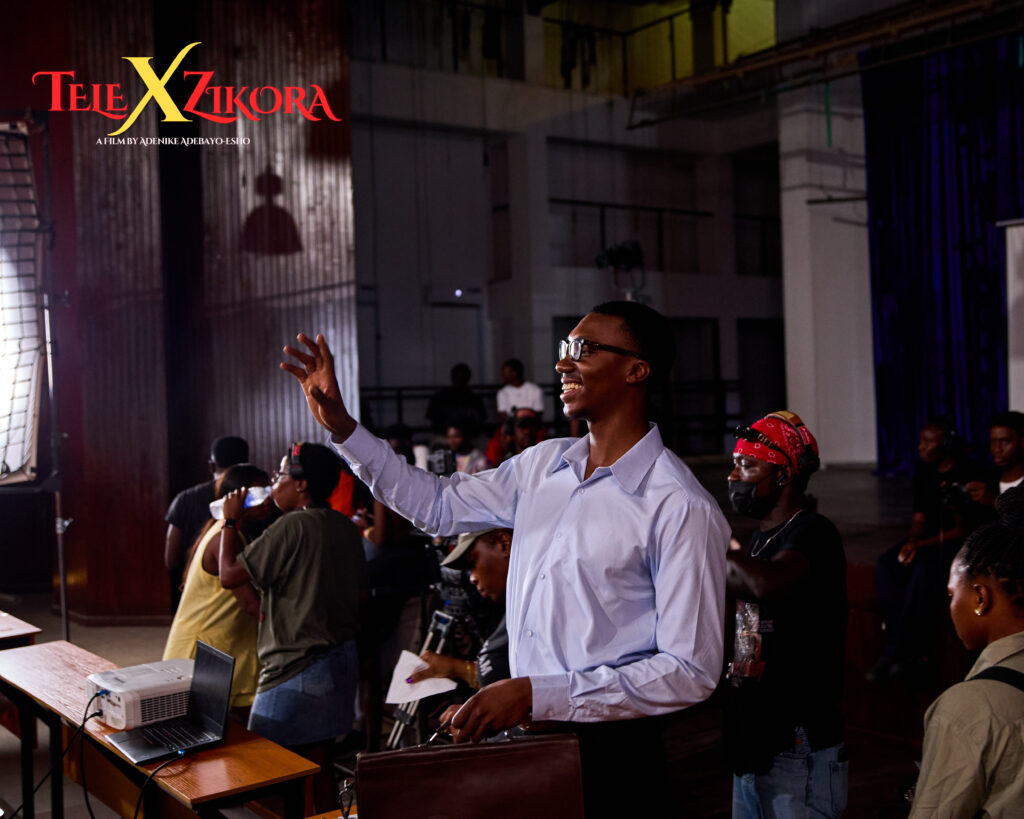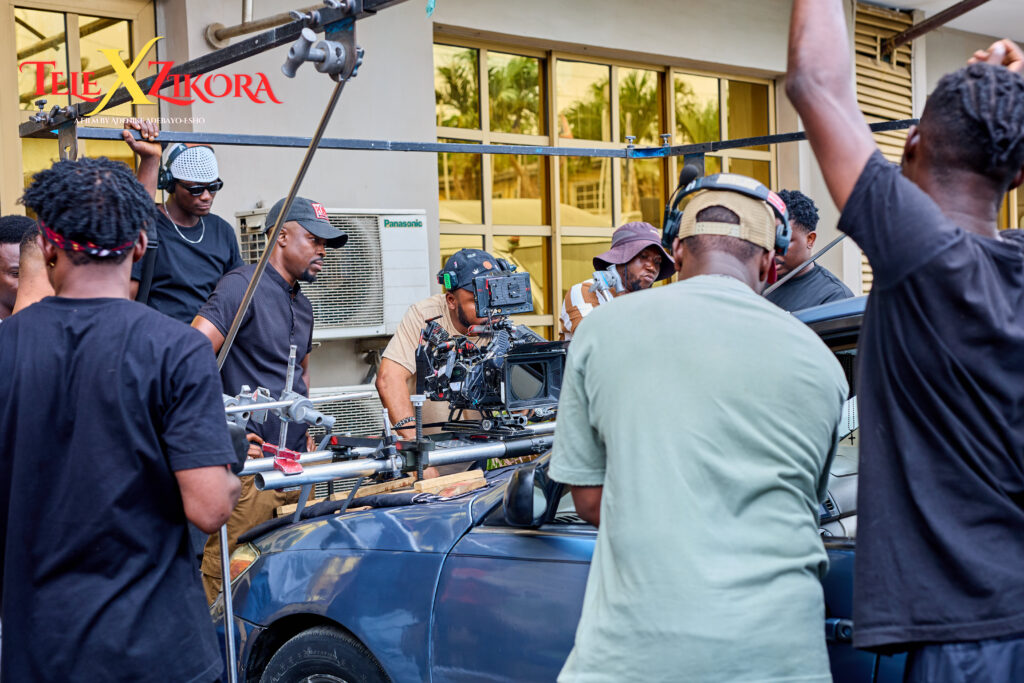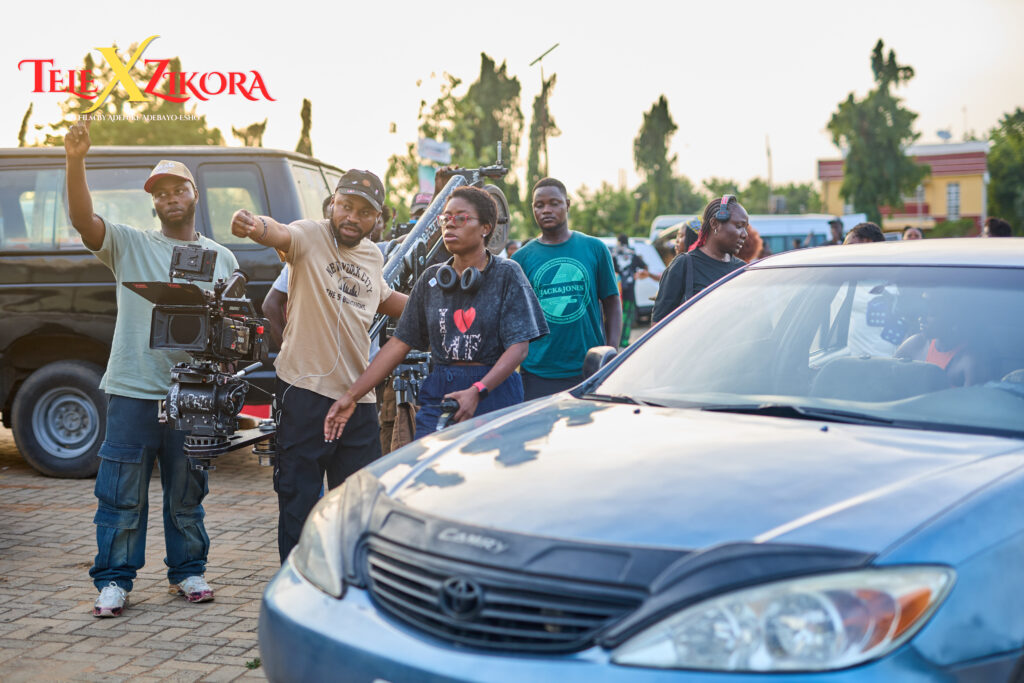

By the time the water stopped flying, everyone was exhausted.
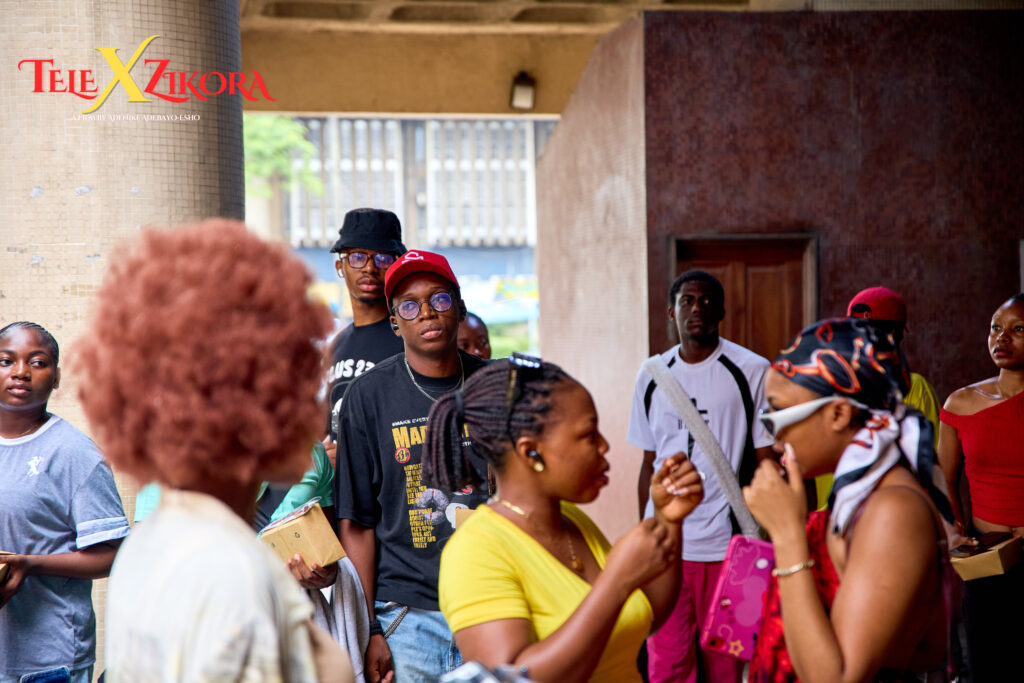
Water guns had turned the set of Tele x Zikora into a playground, and somewhere between shooting one of the film’s biggest scenes and simply having a very good time, the actors appeared to forget there were cameras around them. They went all in.
When it was finally over, Adenike Adebayo-Esho went from actor to actor, handing out hugs and cheek kisses.
“Oh my gosh, thank you,” she remembers saying.
Months later, a glimpse of that day would become part of the teaser announcing Tele x Zikora’s release date. But for Adenike Adebayo-Esho, the water festival scene captured something else about the film: the infectious energy that had run through its cast and crew from the beginning. A big, joyful young-adult story, which started with three characters.
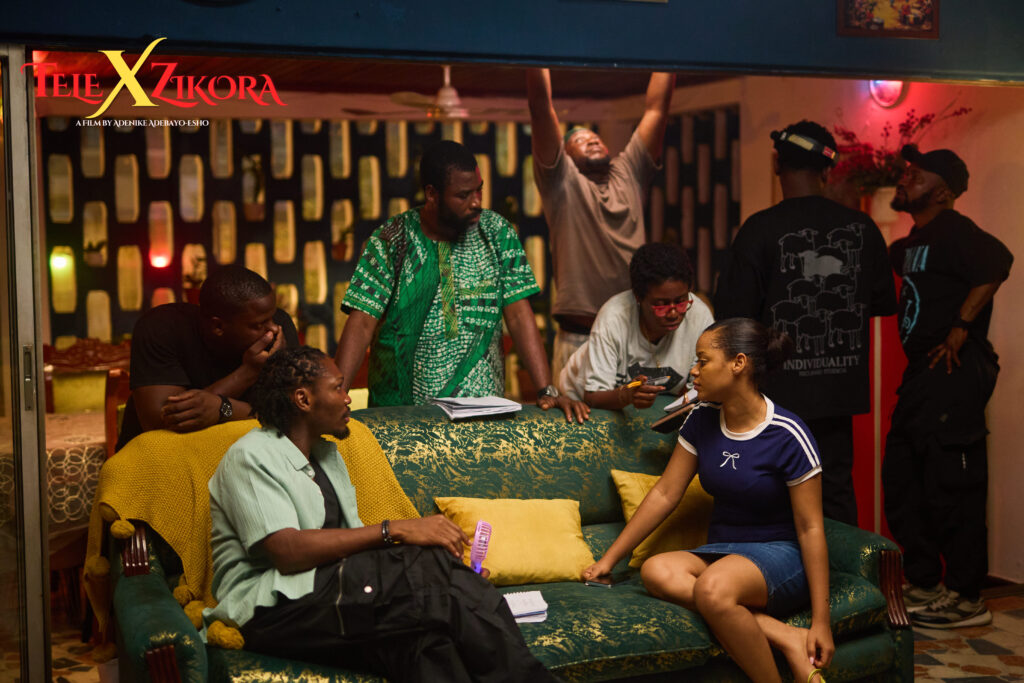
Adenike Adebayo-Esho, better known as Olori Esho, has worn more than a few hats. A lawyer turned content creator, filmmaker, director and producer, she has steadily built a body of work that includes Ch3mistry and her cinema debut, Summer Rain. Now, she is going bigger with Tele x Zikora, a young-adult ensemble film set largely within the fictional Lagos Metropolitan University.
THREE CHARACTERS
Three characters. That was all.
Adenike had not intended to make a campus film at all. But stories, apparently, have plans of their own. The original idea was considerably smaller, but once she began writing, it refused to stay that way.
“The more I wrote and developed it, the bigger it got,” she says.
There were directions she followed and then abandoned: “At different points, I would say, ‘No, no, no, I don’t like the direction this is going.’”
Then the story led her onto a campus and something clicked.
The campus opened the story up to an ensemble, and suddenly the expansion that had threatened to run away from her began to make sense. “The moment I got to the campus and the ensemble part of the story, it was a home run for me,” she says. “I knew that was it. I knew that was where I was trying to get to.” That discovery would become Lagos Metropolitan University, the campus at the centre of Tele x Zikora.
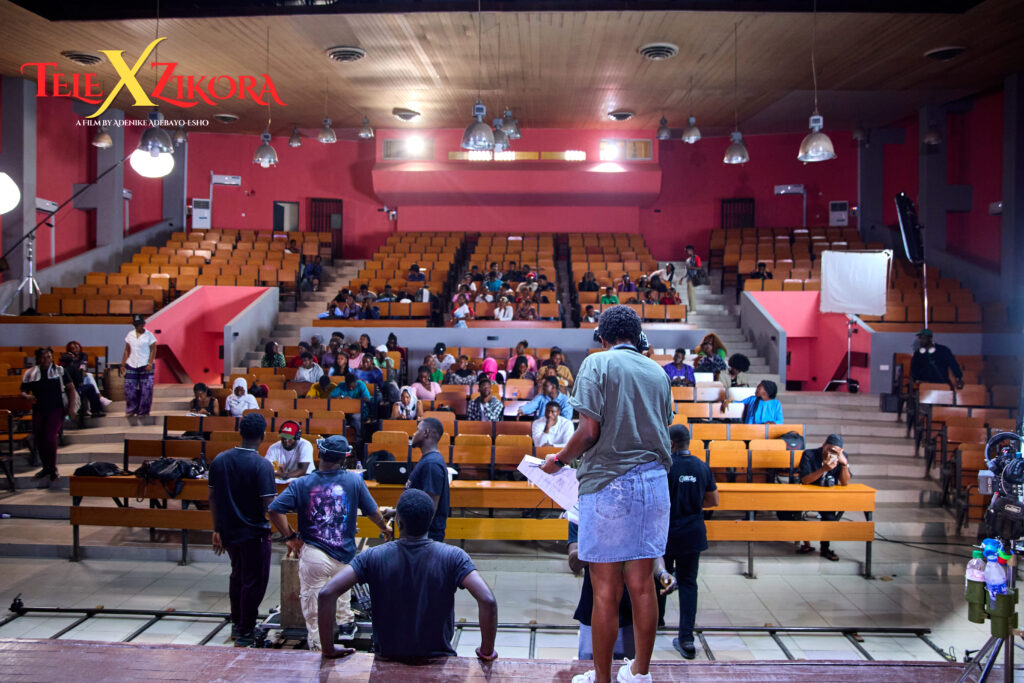
LMU
Adenike doesn’t merely want audiences to believe in it. She wants them looking for the admissions portal.
The campus looks like the sort of place that could make you consider going back to school.
The buildings are polished, and its young students move through a campus deliberately designed to be desired. There is only one problem: you cannot apply to Lagos Metropolitan University. It does not exist.
Well, not quite.
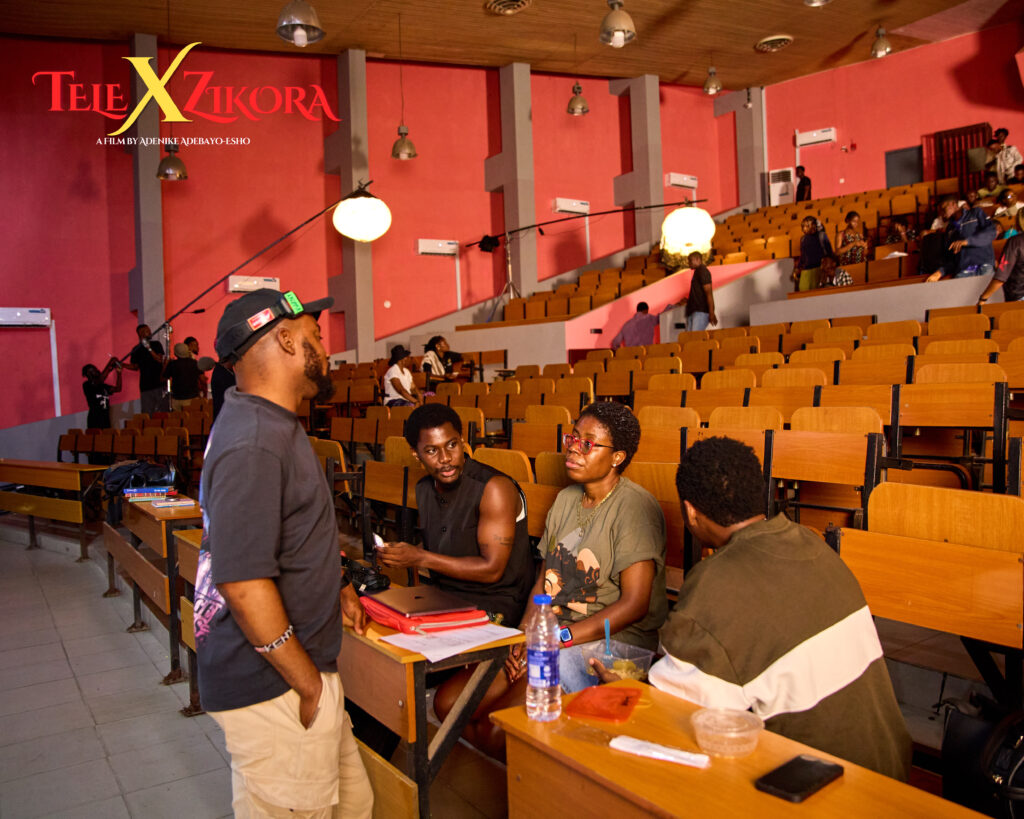
The university at the heart of Tele x Zikora may be fictional, but the campuses on screen are not. The film was shot across two Nigerian universities—a detail its producer, Adenike, has found herself having to point out after early glimpses of the film drew an unexpected reaction: surely, some viewers suggested, a Nigerian university could not look this good.
“I didn’t build a university to shoot the film,” she says.
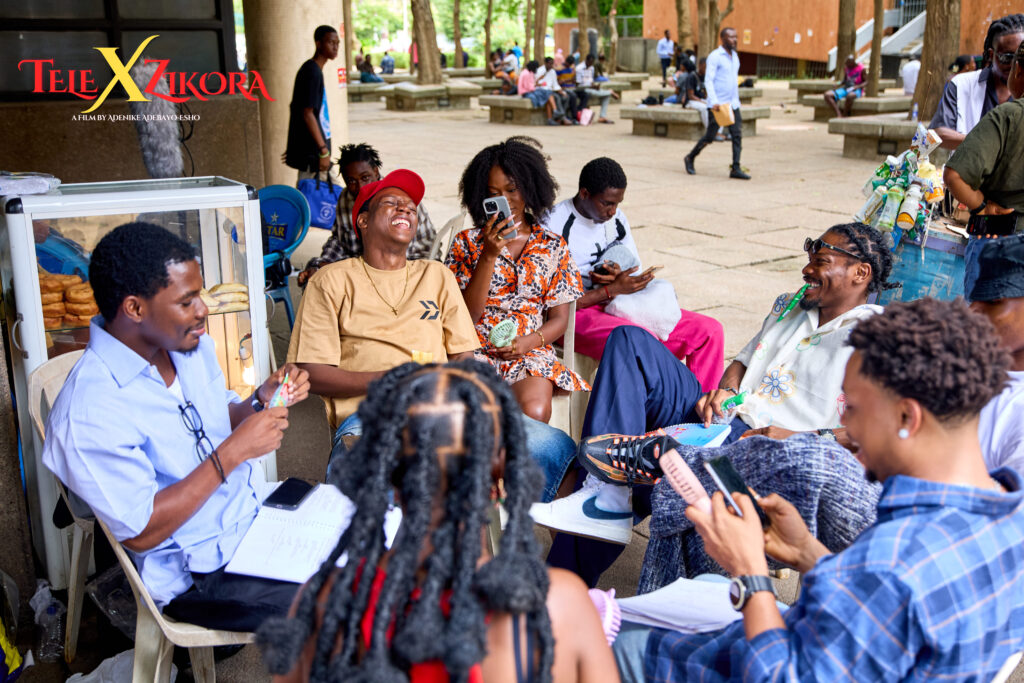
CHOOSE YOUR SHIP
Love transcends generations, and young love has a particular talent for feeling like the end of the world. You have little room for perspective when you are in it. This person is the person. This heartbreak is the heartbreak. And if it doesn’t work out, surely, nothing ever will.
At least, that is how Adenike remembers it. “Speaking as an adult, I feel that with young love, we don’t see past the immediate love,” she says. “At the time, it feels like if it isn’t this person, you will never love again. It always feels like it is all or nothing with this person. But now, as an adult, I know better.”
Tele x Zikora leans into that intensity rather than trying to make its young characters wiser than they are. Their relationships come with the drama, passion and immediacy of experiencing love while still figuring yourself out.
And there isn’t just one version of it.
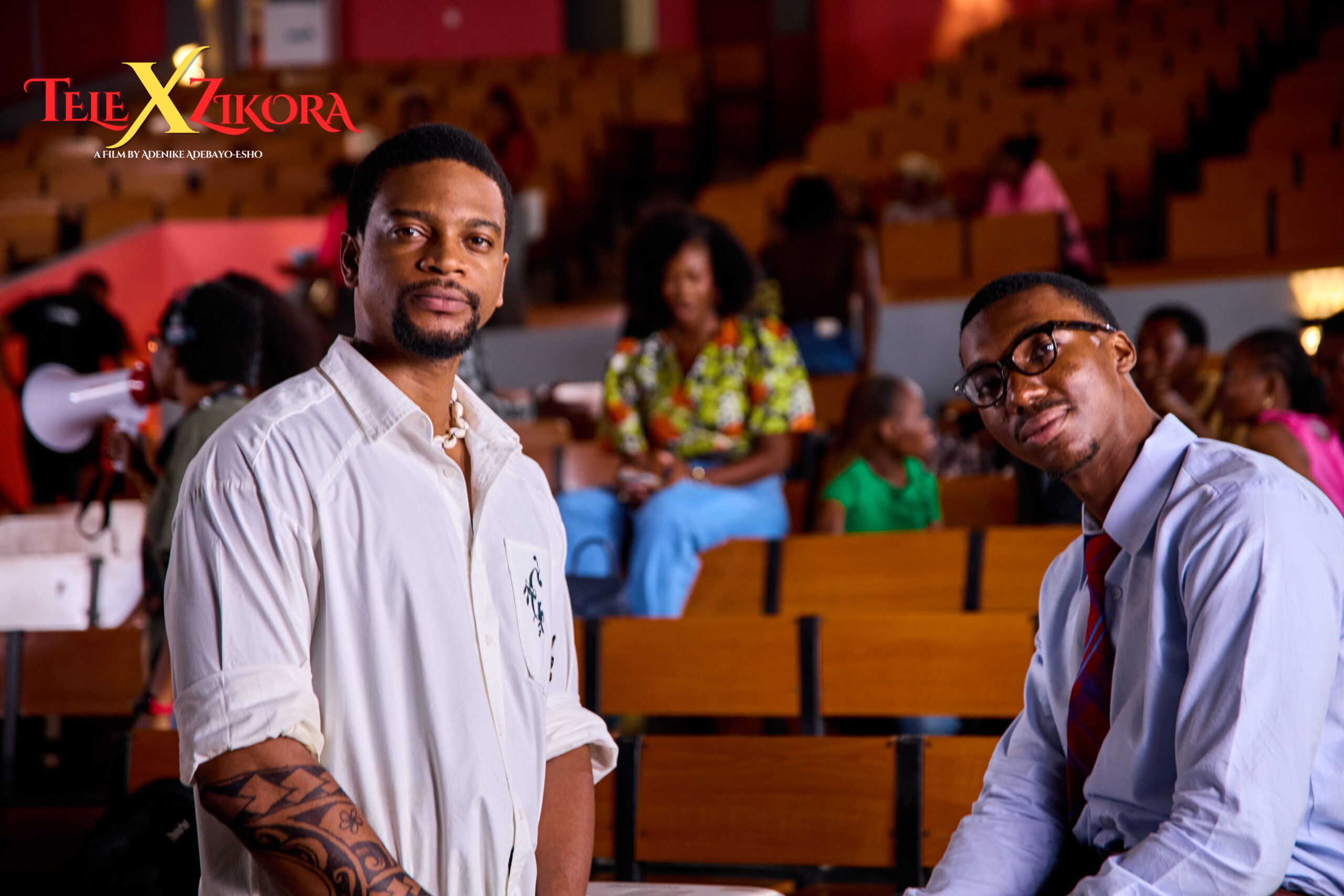
Tele and Zikora may lend the film their names, but Lagos Metropolitan University is populated by several “ships”: Muna and Tega, Emeka and Tara, and Adesuwa and James. Each relationship offers a different expression of young love, and that is the fun part of Tele x Zikora. It isn’t simply asking whether one young couple will make it. It gives us several people, in several relationships, each convinced or perhaps still deciding what love is supposed to look like.
THE X BETWEEN THEM
There is, of course, the small matter of the “x.”
Not Tele and Zikora. Not Tele & Zikora. Tele x Zikora.
“Even the ‘x’ in Tele x Zikora is significant to the story,” she says. “By the time you watch the film, it will be clearer why the title is the way it is.”
BETTING ON CHEMISTRY
Long before Mike Afolarin and Genoveva Umeh became Tele and Zikora, Adenike had a hunch.
She had never seen them play love interests. She couldn’t point to any previous Mike-and-Genoveva romance as proof the pairing would work. She had watched them separately, admired what each could do, and become convinced that, together, they’d have chemistry.
“I don’t know,” she says when asked what made them right for the roles. “I just knew these two would have great chemistry together.”
The feeling only grew stronger as she wrote. “The more I wrote, the more I knew I wanted to pair them together. It was a dream come true.”
Individually, she considered them formidable actors; increasingly, she wanted to see what would happen if she put them opposite each other.
Getting the actors she imagined, however, did not mean asking them to reproduce exactly what she had written.
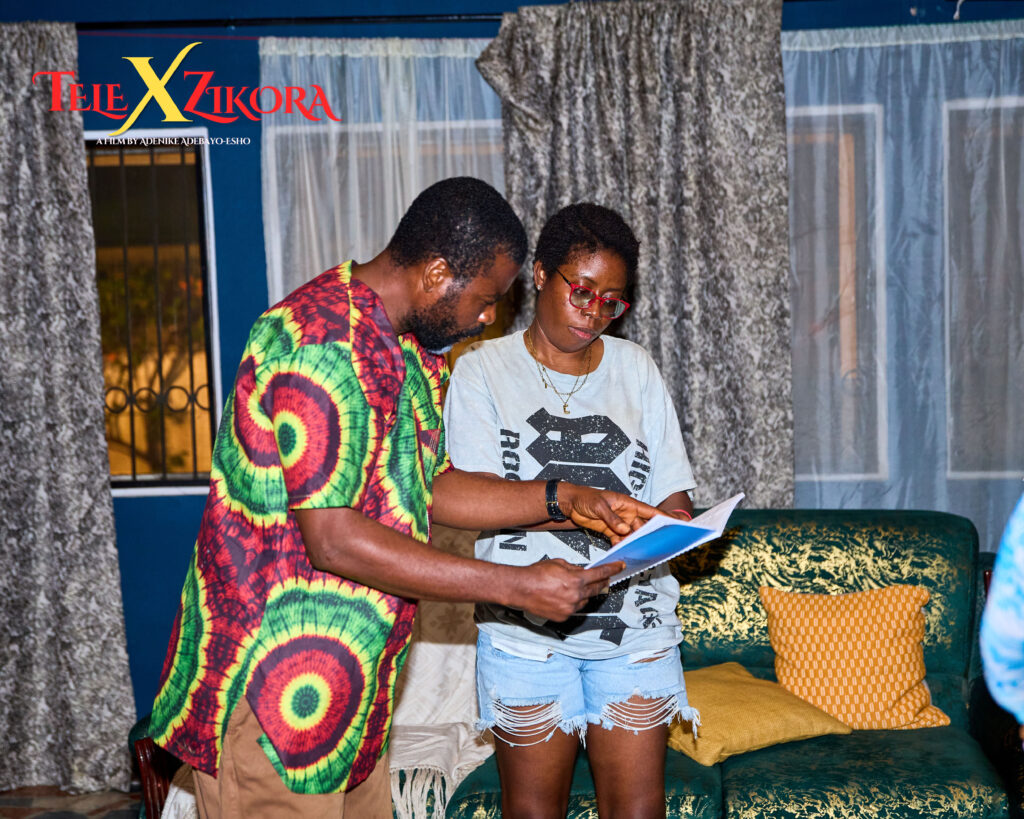
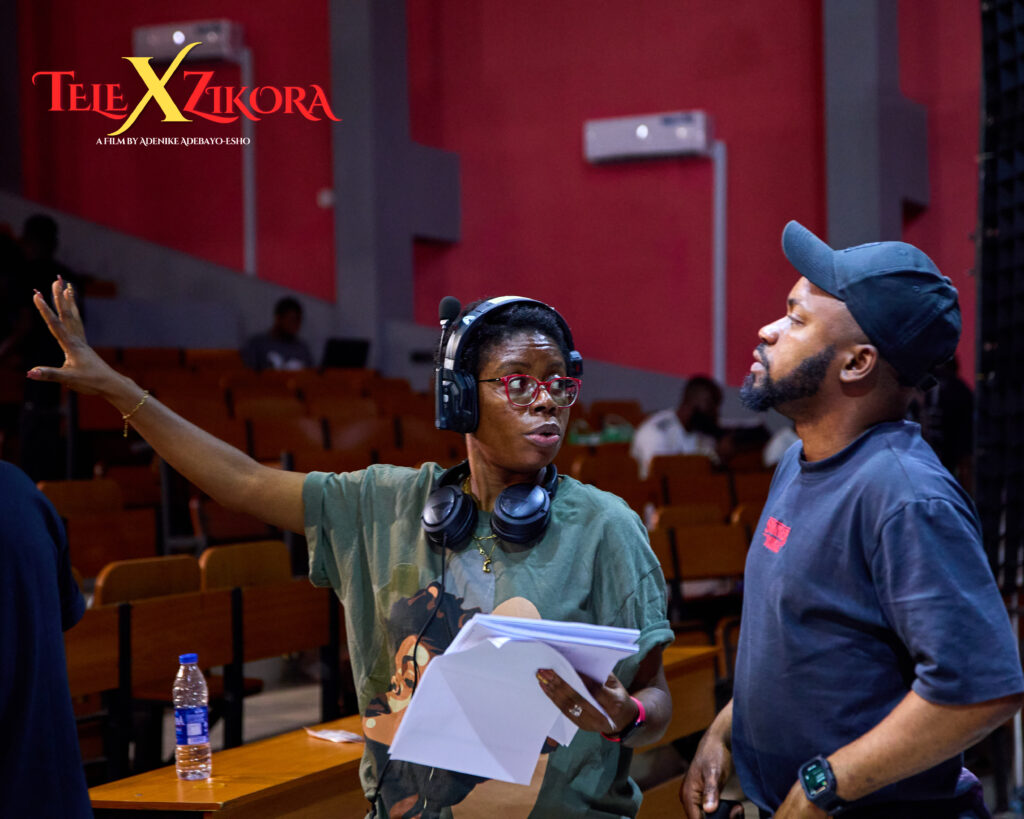
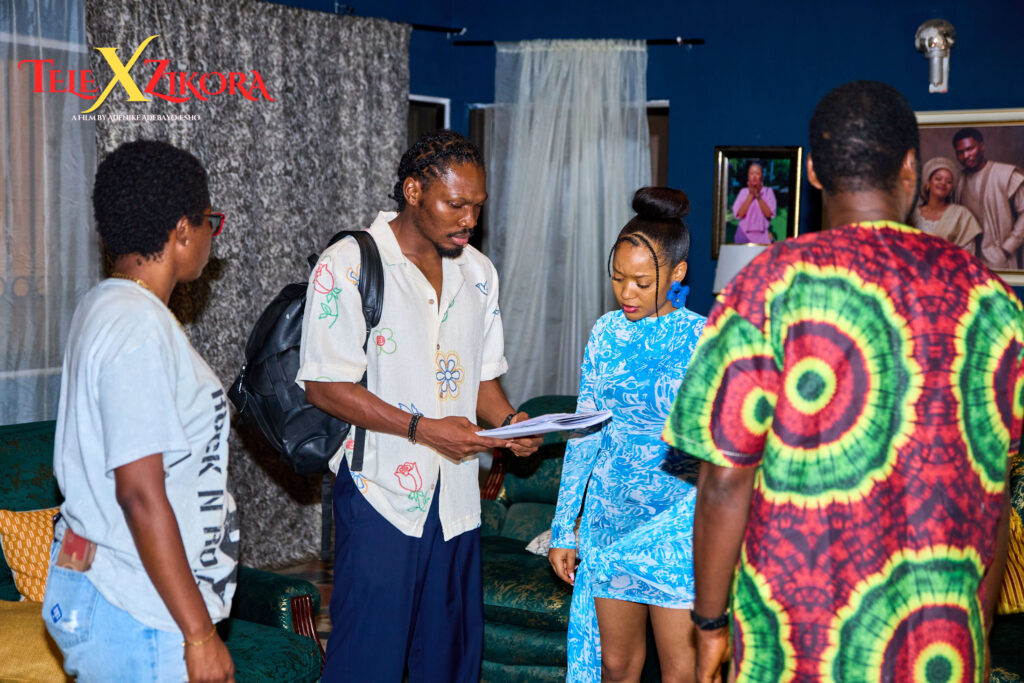
Adenike, also known as Olori Esho, likes to leave room between what exists on the page and what eventually happens in front of the camera. There is her vision of a character, and then there is an actor’s interpretation of that character. Making Tele x Zikora meant learning when to hold on to the former and when to make room for the latter. “I’m not rigid because they are the actors for a reason, so I let them fly,” she says.
As production progressed, the rhythms of individual performers were unveiled. Some arrived immediately; others needed three takes to settle fully into a scene. Rather than fight that rhythm, she learnt to wait for it. “When they get there, they soar.”
An actor would make a choice that pulled a character too far from the page, and she would rein it back in. But every so often, someone would take a line, a gesture, or an entire scene somewhere she hadn’t imagined, and it would work.
Those surprises weren’t limited to the film’s young cast; they also came from the older cast. She remembers watching Ibrahim Chatta take one scene “from zero to one hundred.”
“I was just like, ‘What is happening here? How did we even get here?’”
The best response was not to interfere; if the surprise remained true to the story, she kept it.
THE FIVE PER CENT WORTH FIGHTING FOR
Houston almost didn’t make it into Tele x Zikora.
Several times during production planning, the numbers made a compelling argument for cutting it. Shooting in America meant spending in dollars for a portion of the film that would eventually account for less than five per cent of its runtime. Lagos, after all, is where almost the entire story lives.
But Adenike kept coming back to what would be lost.
“The story could still have worked,” she says. “But it would not have been as immersive as I wanted it to be for the audience.”
Without Houston, a character could simply arrive in Lagos and explain what had happened before. Economically, it was the easier choice. Story-wise, she wanted more. She wanted the audience to see the journey unfold rather than receive it second-hand.
“I didn’t want a situation where, suddenly, she is in Lagos, and he is now in the story,” she says. “I thought that if we were bringing people to the cinema, we should make it worth their while.”
So Houston stayed.
It was a relatively small piece of Tele x Zikora, but an expensive one.

PAID, CLEARED, SHUT DOWN
Some production problems announce themselves before the cameras roll. Others wait until filming has begun.
According to Adenike, for one basketball sequence in Tele x Zikora, the production had paid an “exorbitant” fee to use a location. The paperwork was complete, payment had been made and the team had been cleared to shoot. It was an expensive location for a single scene, but everything appeared settled.
Until it wasn’t.
Barely twenty minutes into filming, security personnel arrived and shut the production down.
What followed was nearly three hours of phone calls, questions and running around as the location manager, line producer and production manager tried to untangle what had gone wrong. The production had arrived around 1:30 p.m.; by 2 p.m., filming had effectively ground to a halt.
The frustration was compounded by how the situation looked to the people waiting around. “The production looked irresponsible,” she says. Even some of the actors initially assumed the team had tried to talk its way into a location it had not properly secured until they saw Adenike arguing, proof of payment in hand.
“If I tell you how much I’m paying just to shoot this one scene…” she recalls.
She attributes the shutdown to internal politics, which cost the production precious hours of an already packed shooting day.
On another day, nobody shut them down. The problem was light.
A night scene lasting barely two-and-a-half minutes on screen took approximately five hours just to light. The school where they were filming did not have the lighting the scene required, turning a few minutes of finished footage into hours of preparation before performance could even become the concern.
“It wasn’t about getting the performance in the scene right,” Adenike says. “It was the preparation required to shoot it.”
The result was worth it.
“It turned out beautifully,” she says. “When you watch it, I hope people recognise and appreciate that scene.”
The audience probably won’t know it took five hours to light.

WHAT SUMMER RAIN TAUGHT HER
Summer Rain taught Adenike something about Nigerian cinema audiences. Or, as she puts it, “Nigerians don’t like slow burns.”
Summer Rain, her first film made for the big screen, gave her an education not only in filmmaking but in what audiences expected once they settled into those seats.
“I knew it was a slow burn, but it was my first trip to the cinema, and I didn’t know what the Nigerian audience was like,” she says. What she discovered was an appetite for stories that move: some comedy, momentum and enough happening to keep the experience alive.
Tele x Zikora bears that lesson.
But the more difficult education may have been learning when to let go.
Filmmakers can become really protective about their work. But “If something needs to go, it needs to go,” she says. “If it isn’t important, it isn’t important.”
After Summer Rain, she read the reviews. She watched how audiences responded, including what they loved and what they didn’t. She had so much affection for her first project—“Summer Rain is my baby”—but affection did not prevent examination.
“I paid attention to the overall response.”
That attention followed her into Tele x Zikora, only now with a bigger canvas. The budget was larger, the scale more ambitious, and she was determined that the increased resources would show in the details.
“I was there with my head, neck, body and eyes,” she says. “I had eyes at the back of my head.”
Costumes, production and the smallest details came under scrutiny. Nothing, she felt, could afford to be “wishy-washy.” Apparently, the cast and crew heard this often enough that one particular question made it into a video of things their director said on set:
“Do you know we’re shooting for the cinema?”
She remembers directing it at a crew member after spotting something that fell short of the standard she wanted.
“What kind of film do you think we’re shooting?” she recalls asking. “Do you know this is a cinema film?”
It was partly a reprimand, but it also captures the distance between Summer Rain and Tele x Zikora. The former was her introduction to the cinema audience; the latter was made by someone who had met that audience, listened to it and returned with a clearer idea of the experience she wanted to give them.
TEN YEARS FROM NOW
Ten years from now, Adenike hopes her films will still be playing.
Not necessarily because someone has stumbled upon them for the first time, but because someone who already knows how the story ends has decided to press play again.
“Rewatch value is very high for me,” she says. “It’s incredibly important.”
She points to Pretty Woman, a film released decades ago that can still gather people around a screen. That kind of longevity—the ability of a story to outlive the moment in which it was made—is what she wants for her own work.
She believes she has already seen glimpses of it. Summer Rain, she says, remains one of the best-performing projects on Kava, something she attributes not only to new viewers discovering the film but to old ones returning to it. She has seen something similar with Ch3mistry.
Now, she wants Tele x Zikora to inspire that same instinct to return.
“When people go to the cinema, I want them to return a second, third and fourth time,” she says. “I want them to keep going back, constantly enjoy it and tell other people to watch it.”
It is an ambitious ask in an industry where every new release is quickly followed by another. But perhaps timelessness begins exactly there: with making something worth returning to.
“I hope I make projects people find timeless,” she says, “so they can watch them ten years from now and still say, ‘Man, that was a beautiful film.’”
Rapid Fire
A film you wish you had directed?
I honestly can’t think of any. Maybe Off Campus. It isn’t a film; it’s a young-adult series.
A fictional couple you’ll always root for?
Let me pick my own: Murewa and Dimchi from Summer Rain.
The last film or series you recommended to someone?
I was going to say a K-drama, but no, that’s a lie. The last one I recommended was a film on YouTube, The First Ministry, by Biodun Stephen.
One thing you always need on set?
Laughter, most definitely. Love and hugs. Laughter and hugs, yes, those two things.
Lastly, describe Tele x Zikora in three words.
Beautiful, romantic and dramatic.
Tele x Zikora opens in Nigerian cinemas on October 23, 2026.