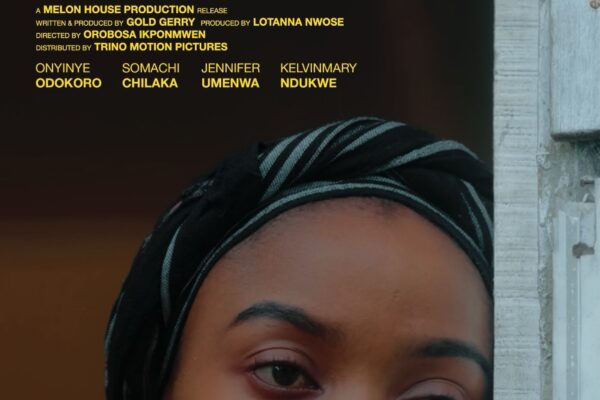
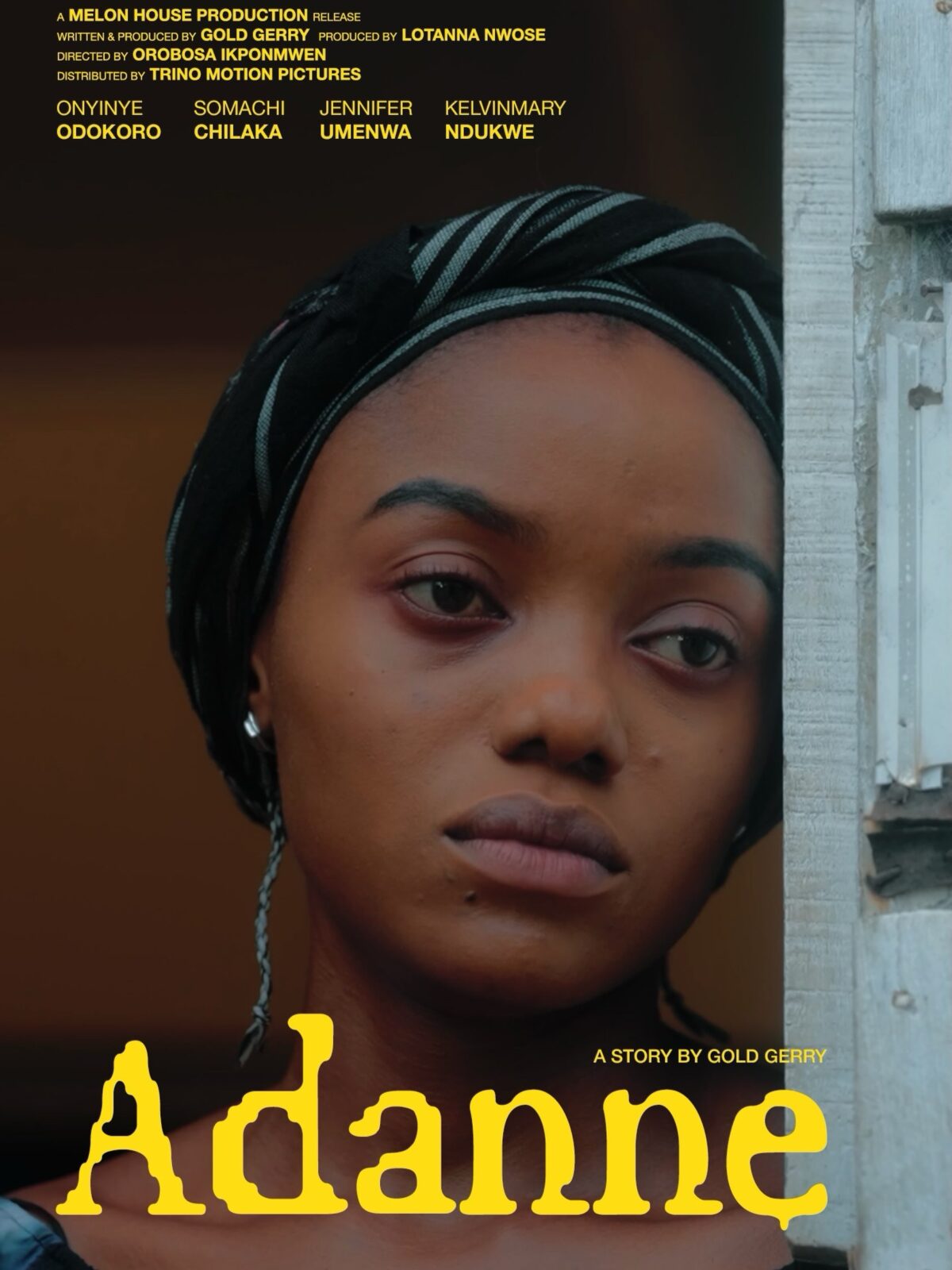
Melon House Production’s debut feature, Adanne, began with a family story and a commitment to its emotional ambition. Written and produced by Gold Gerry, directed by Orobosa Ikponmwen, and co-produced by Lotanna Nwose, the drama wrapped production in December 2025 and has already been building festival momentum, including a confirmed slot at the 2026 All African Independent Film Festival, running October 15–17.
Adanne follows three generations of Igbo women as they navigate love, duty, and the family tensions passed down through the generations. At its centre is a teenager torn between her creative ambitions and the pressure to carry on her family’s legacy. Mmesomachi Chilaka leads the cast as Adanne, with Onyinye Odokoro as her mother, Ijeoma, alongside Jennifer Umenwa and Kelvin-Mary Ndukwe. The film is Ikponmwen’s feature directorial debut, following a string of short films including BODMAS, for which she earned a 2025 Film Joint Award nomination for Voice of Impact. Trino Motion Pictures will distribute; a release date has not yet been set.
Behind that milestone, though, is a production story that underscores the film’s producers’ resourcefulness—in an exclusive chat with OYA, the production team revealed some of the challenges they had to surmount and how they brought the vision to life. The central challenge, indeed, was how to stretch the limited resources available far enough to match the emotional scope the film demanded. The question then was, “How do we make the best possible film with what we have?” Lotanna said. Rather than scale down the story, they restructured how they worked and were deliberate about where they directed their resources.
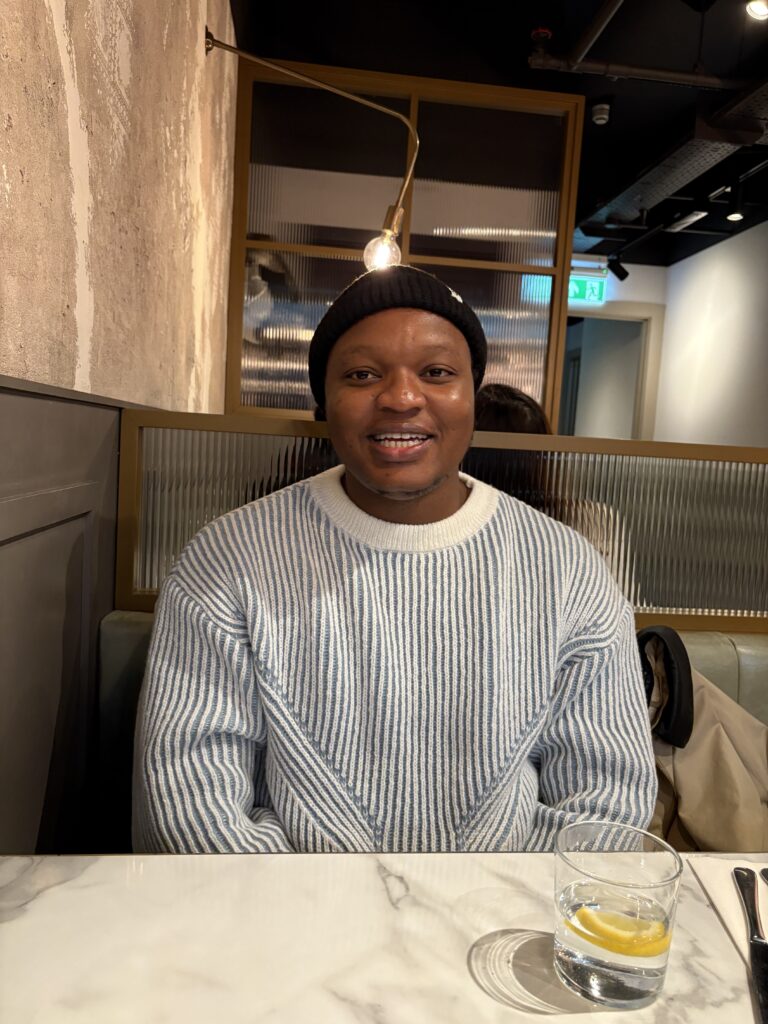
That shift in mindset became the production’s guiding philosophy from development through postproduction. The producers describe the constraints as ultimately clarifying, pushing the team to stay focused on keeping the story, performance and the film’s emotional core at the centre of every decision. Collaboration became the mechanism that made that philosophy workable. On an independent production of this size, the producers say there’s little room for rigid departmental boundaries. Everyone has to understand and invest in the whole film, even beyond their individual roles. The team worked to build an environment where cast and crew could speak openly about what was achievable, finding practical ways to achieve the film’s creative intentions.
That same resourcefulness carried into the film’s visual language. Ikponmwen used distinct colour palettes across production design and costume to differentiate the three timelines while preserving the connections between them.
The story’s three generational timelines, while still showing the threads connecting them, came down to production design and costume rather than large-scale set changes, using distinct colour palettes for each era’s wardrobe and settings to keep them visually legible.
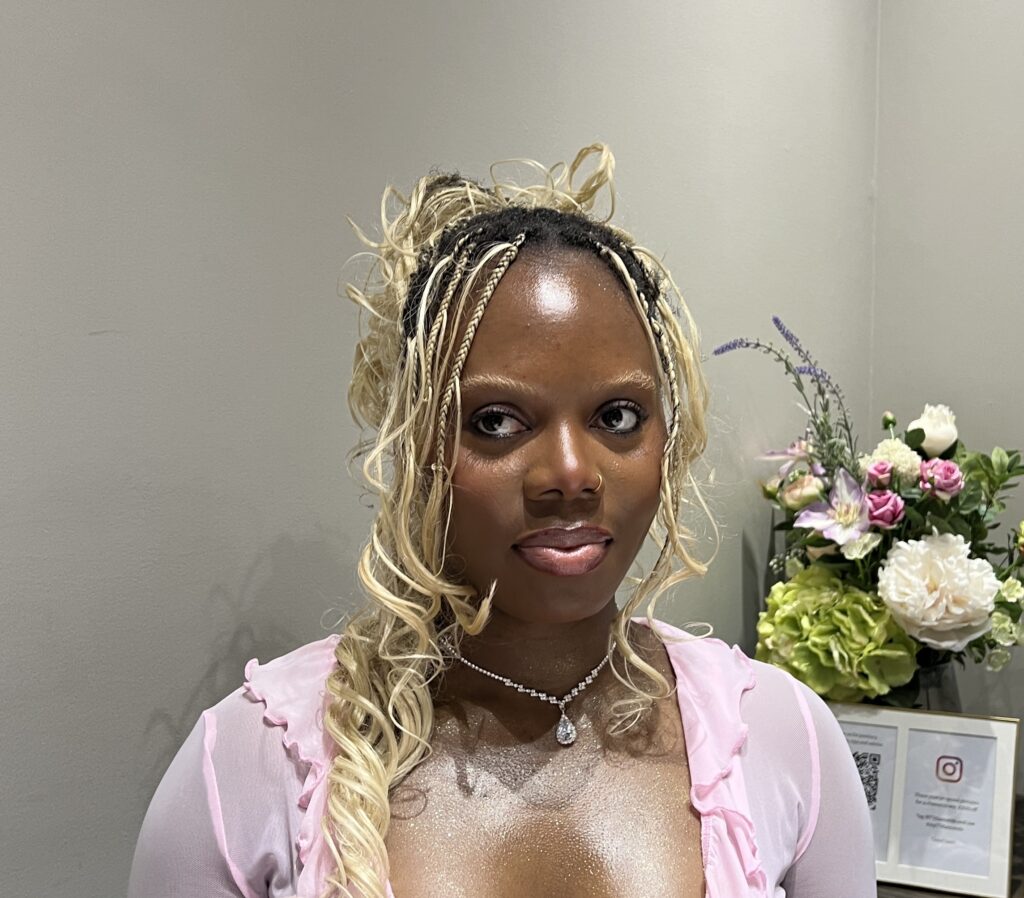
For Gold Gerry, Adanne draws directly from personal experience, specifically, her relationship with her mother and her own position as a firstborn daughter. She describes that role as carrying a particular kind of responsibility: an awareness that you’re not just living for yourself, but inheriting expectations, family history and sometimes unspoken emotional burdens from the women who came before you. That dynamic shaped how she approached the mother-daughter relationship at the film’s centre. Gerry was intentional about avoiding a simple hero-and-villain framing, saying, “I wasn’t interested in telling a story where the mother is simply right or wrong, or where the daughter is simply a victim or a rebel.” Instead, she wanted to sit inside the complexity of two women who love each other deeply but don’t always understand one another. Questions of inheritance run through the film: what daughters retain from their mothers, what they release, and how they form their own identities while carrying the lineage forward.
The choice of a director is also telling. Gerry says choosing Ikponmwen to direct came down to sensitivity over spectacle. Adanne leans on relationships, silence and unspoken tension rather than plot mechanics, which meant the production needed a director who would trust quieter, more restrained moments rather than overplaying them. Gerry points to Ikponmwen’s ability to treat the characters as full people rather than plot devices, and her care in handling the story’s generational and cultural texture, making sure the family structures and inherited expectations at the heart of the film felt lived-in rather than merely decorative. Just as important, the producers say, was Ikponmwen’s willingness to collaborate, balancing protection of the creative vision with the practical adaptability an independent production requires.
With production wrapped and its festival run taking shape, Adanne heads into its next phase with distributor Trino Motion Pictures, with further festival selections expected in the coming months. The film is set to hit screens in London this November at the Women of the Lens Festival.