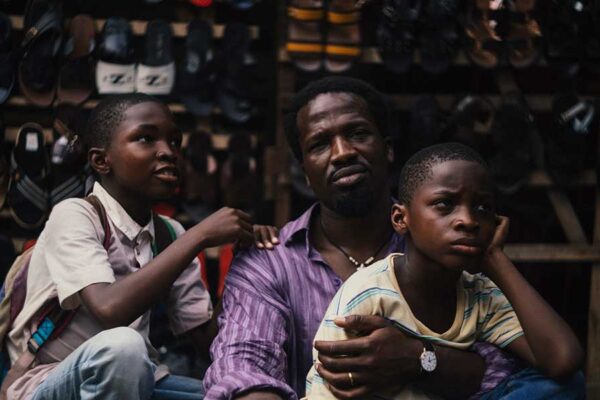

Some films return to the screen to stir nostalgia. Others return to remind an industry of what it may have overlooked. The 2026 return of Mike Bamiloye’s Agbara Nla to the screen offers an opportunity to consider both. From a reported ₦5,000 production in 1993 to a ₦170 million opening frame in 2026, Agbara Nla’s return to cinemas raises a bigger question about the commercial future of faith-based filmmaking in Nigeria.
Written by Aaron Ayo Akinyemi
In an industry where opening-weekend and box office figures are closely watched, cinema audiences are courted with increasingly ambitious campaigns. Agbara Nla: The Return, directed by Damilola Mike-Bamiloye and Joshua Mike-Bamiloye, opened in cinemas on October 1, 2026. Its opening frame reached ₦170.59 million, including about ₦71.4 million from previews and ₦99.15 million over the Friday-to-Sunday opening weekend. The combined figure made it one of the most striking theatrical openings for a faith-based production in 2026.
The numbers are remarkable. But the more interesting question is what they reveal.
For years, faith-based filmmaking in Nigeria has occupied a distinct space in the country’s screen culture. Its stories have travelled through churches, Christian networks, home-video releases and digital platforms, often reaching audiences whose relationship with the films extends beyond entertainment. These viewers may approach a story with familiar spiritual convictions, recognise its moral questions, or see their own experiences reflected in its treatment of faith, family, relationships, and personal transformation.
Yet that audience has not always translated into equally visible theatrical or financial success.
Agbara Nla: The Return arrives at a moment when that relationship appears to be changing. Its opening follows the commercial performances of films such as What About Us, Onobiren: A Woman’s Story, God Calling and The Wait. These films raise a question that goes beyond any single release: has faith-based cinema found a more sustainable place in Nigeria’s theatrical market, or is Agbara Nla an exceptional success built on decades of cultural recognition?
The answer requires looking beyond the opening weekend.
From the Church to the Cinema
Part of what makes Agbara Nla: The Return significant is the history it carries into the cinema.
The original Agbara Nla, produced under Mount Zion Faith Ministries, emerged from a tradition in which filmmaking was closely connected to Christian ministry, often worked with limited resources, and relied on church communities to help circulate its stories.
Back then, the conversation focused less on the commercial potential of faith-based films and more on using drama to communicate religious ideas. The commercial success of Agbara Nla: The Return, however, invites a different conversation: what has changed in the relationship between faith-based audiences and the theatrical market, and what does this shift mean for the future of faith-based filmmaking in Nigeria?
The faith-based genre did not suddenly discover an audience when its productions began appearing on cinema screens. It had spent years cultivating one through different channels.
Church screenings and commercial cinema releases may reach overlapping audiences, but they operate under different conditions. The former can draw on an established community and a united purpose. The latter asks viewers to make a separate decision to spend money on a ticket, travel to a cinema, choose a particular film among competing releases, and commit their time to the experience.
That decision is commercial, even when the story carries a spiritual message.
For Agbara Nla: The Return opening suggests the film generated considerable interest before and during its first weekend. This reflects a combination of audience anticipation, an effective campaign, and a strong connection with an existing audience. It does not, on its own, establish how widely the film will travel beyond that initial audience.
Still, the scale of the opening changes the conversation. Faith-based cinema can no longer be discussed only as religious expression operating at the margins of commercial filmmaking. At least some productions are demonstrating that the audience may be large enough to support serious theatrical ambitions.
The next question is whether that audience can be reached consistently.
An Audience That Will Pay
Before Agbara Nla: The Return arrived, Onobiren: A Woman’s Story offered another indication of the commercial possibilities of faith-orientated storytelling.
Written and executive-produced by Laju Iren, the film opened in March 2026 and reportedly earned ₦30.1 million across Nigeria and Ghana during its opening weekend. It went on to cross ₦100 million within three weeks, eventually reaching a reported cumulative gross of approximately ₦138 million after seven weeks.
The film’s performance matters not just because it crossed a financial milestone, but because it points to a different kind of opportunity for the genre.
While the Agbara Nla story is rooted in a recognisable spiritual conflict and a legacy familiar to generations of Christian viewers, Onobiren places a woman’s story at the centre of its appeal. The distinction matters. Faith-based filmmaking is not one uniform category with a single narrative formula or audience response. Its stories can engage spiritual conflict, personal identity, family pressures and the complexities of ordinary life in different ways.
The commercial question is whether these different approaches can bring viewers into cinemas without requiring every film to rely on the same kind of recognition.
Onobiren suggests there is room to explore that possibility. Its reported run beyond the opening weekend shows that a faith-oriented film can continue attracting audiences after its initial release. That is a more useful sign of theatrical potential than a strong first weekend alone, because a film’s life in cinemas depends on whether interest survives the first wave of attention.
However, the numbers have limits. Onobiren’s reported opening figures cover Nigeria and Ghana, while Agbara Nla: The Return’s widely reported opening-frame figure includes previews. Their grosses are therefore not directly interchangeable measures of performance.
The broader point is not that one film has established a formula for the other. The genre is showing more than one route to an audience.
If the commercial future of faith-based cinema depends entirely on reviving familiar titles or appealing to viewers through established religious networks, its growth may remain limited by the number of properties and communities capable of producing that level of anticipation. A wider range of stories gives the market more ways to grow.
But stories still need an audience willing to turn interest into ticket sales. And in this respect, What About Us provides another important part of the picture.
What the ₦100 Million Mark Actually Means
Released in July 2024, What About Us marked the executive production debut of Pastor Emmanuel Iren of Celebration Church International. Directed by Kayode Kasum and written by Ife Olujuyigbe, the film opened to a reported ₦24.6 million and subsequently crossed the ₦100 million mark in year-end box-office reporting.
It showed that a faith-oriented production could enter the commercial cinema space and generate revenue that made it part of the wider Nollywood box-office discussion.
There is a temptation to treat crossing ₦100 million as proof that a genre has arrived, but it is not proof of a stable market.
A film’s gross tells us how much money it has generated at the box office. It does not tell us how much its producers have earned after cinema shares, distribution arrangements, marketing and production costs. Nor does it show whether the same audience will turn out for the next film, especially when it has different stars, a different campaign, or a story without the same cultural familiarity.
The distinction between gross and profit matters especially when discussing the commercial prospects of Nigerian filmmaking. A production can generate an impressive headline figure while still facing substantial costs. Conversely, a film with a smaller gross may perform well against its budget. Without comparable information on costs and revenue arrangements, box-office totals cannot tell the whole business story.
Comparisons across different years also have limits. Ticket prices change. The number and location of available cinemas change. Competing releases, economic conditions, and marketing strategies all influence a film’s performance. A ₦100 million gross in one year is not automatically equivalent to the same gross in another.
But consider this: can faith-based films maintain their runs beyond opening weekend? Can producers make financial decisions based on a clearer understanding of the audience rather than treating each successful release as an isolated event?
Those questions lead to the films that came before these recent milestones.
Before the Breakthrough
In 2018, God Calling, written and directed by Bodunrin Sasore, entered cinemas with a story built around faith, grief and the possibility of encountering God in the middle of personal crisis. Its reported lifetime theatrical gross was approximately ₦36.82 million over a seven-week run, with a wide release in 34 cinemas.
Three years later, The Wait, directed by Yemi Morafa and Fiyin Gambo and based on Yewande Zaccheaus’ God’s Waiting Room, followed, telling a story about relationships, careers, family, and the difficult experience of waiting for life to unfold as hoped. Its reported lifetime gross was approximately ₦9.27 million across four weeks, with the widest release of 44 cinemas.
Compared with the recent performances of What About Us, Onobiren and Agbara Nla: The Return, these figures seem modest. But their value lies in the longer view they provide.
Faith-based films were already making their way into commercial cinemas before the current run of high-profile successes. They tested stories, found audiences, and operated within the same theatrical system that now hosts much larger openings.
The difference between those earlier figures and the more recent results invites questions about what has changed. Has the audience grown? Have production values and marketing campaigns improved? Are filmmakers reaching viewers beyond established church communities? Have distribution arrangements or audience expectations shifted? And how much of the difference can be explained by changes in ticket prices, cinema access and the broader market?
The available grosses cannot settle those questions individually. They do, however, show why the genre deserves examination as part of Nigerian cinema’s development rather than as a separate conversation about religious messaging.
There is also a practical reason to be careful with the comparisons. A film’s widest release, its run length, and its total admissions can help explain gross in ways the headline figure cannot. A production playing in more cinemas has a different opportunity to sell tickets from one with a smaller footprint. A film that sustains demand for several weeks has demonstrated something different from one whose revenue is concentrated at the beginning.
The next stage of the conversation needs more than a ranking of titles by how much they earned. It needs a clearer picture of how these films reached audiences, how long those audiences kept showing up, and what the results meant for the people who financed and distributed them.
That is where Agbara Nla: The Return’s success becomes particularly interesting.
The Work Beyond the Opening Weekend
A reported opening frame of ₦170.59 million gives Agbara Nla: The Return a strong commercial starting point. But an opening is a beginning, not a conclusion.
The film’s subsequent performance will help determine what the number means for the wider genre. Sustained demand could strengthen the argument that faith-based films can support ambitious theatrical releases. A sharp decline after the opening would not erase the achievement, but it would suggest that the conditions behind a major debut may differ from those needed to sustain a film over several weeks.
Neither outcome should be read in isolation. One film cannot establish the future of an entire category, just as one disappointing release cannot disprove its commercial potential.
The more useful question is what the industry does with the evidence.
For producers, the opportunity is to understand the audiences already responding to these films, without assuming every faith-based story will attract the same viewers. The recognition attached to Agbara Nla may create interest in the genre, but each new production will still need to establish its own appeal. A familiar title can give it a head start; an original story must find a different route into the conversation.
For distributors and exhibitors, the question is how to assess these films on their own merits and give successful releases a chance to find their audience. Strong openings are useful signals, but decisions about screen allocation and the length of a theatrical run ultimately depend on demand over time.
For filmmakers, the challenge is to connect the spiritual purpose of their work with cinema’s demands as a commercial medium. A film may begin with a message, but the message alone doesn’t guarantee audiences will buy tickets. Storytelling, craft, performance, promotion and distribution remain part of the equation.
There is a larger opportunity here, too. If faith-based cinema can draw on an established audience while making room for a wider range of stories, it could become a more durable part of Nigeria’s film economy. That would mean more than a handful of successful titles. It would mean an environment in which producers can assess risk more intelligently, audiences can expect a steady flow of distinct films, and commercial success can create room for the next production.
The evidence is encouraging, but the work is not finished.
What Comes After Agbara Nla?
The distance between the reported ₦5,000 production of the original Agbara Nla and the ₦170.59 million opening frame of its 2026 return is striking. It captures not only the journey of a film property but also the changing possibilities of Nigerian filmmaking.
Yet the most important part of that journey may not be the size of the latest box-office figure but the possibilities it can birth.
What About Us and Onobiren: A Woman’s Story have shown that faith-oriented stories can cross the ₦100 million mark in reported theatrical grosses. God Calling and The Wait show that the genre’s relationship with cinemas didn’t begin with the latest successes. Agbara Nla: The Return has now pushed the conversation into a new register, with an opening that is difficult to ignore.
Taken together, these films offer grounds for optimism, but they don’t yet paint a complete picture of a sustainable market. That will depend on what happens beyond individual breakthroughs: whether audiences keep turning up, whether more productions can achieve meaningful runs, whether the economics work for the people financing them, and whether success creates opportunities for films that don’t arrive with an established title or a built-in following.
A genre becomes commercially durable when success is no longer an exception that must be explained every time it happens.
The task is to turn that possibility into something repeatable.
Agbara Nla: The Return has made the case for attention. What comes next will determine whether this moment becomes a milestone for one film or the start of a more durable future for faith-based filmmaking in Nigeria.
Edited by Rhoda Akintola