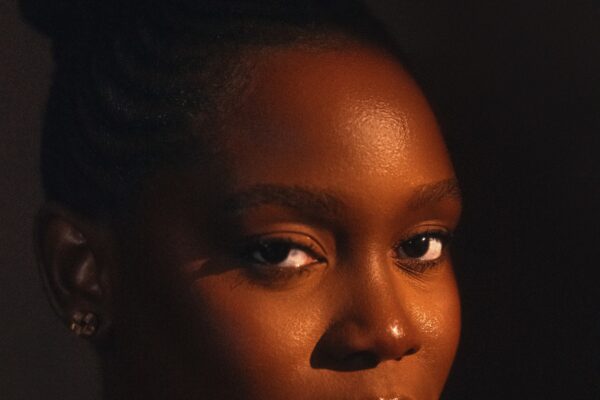
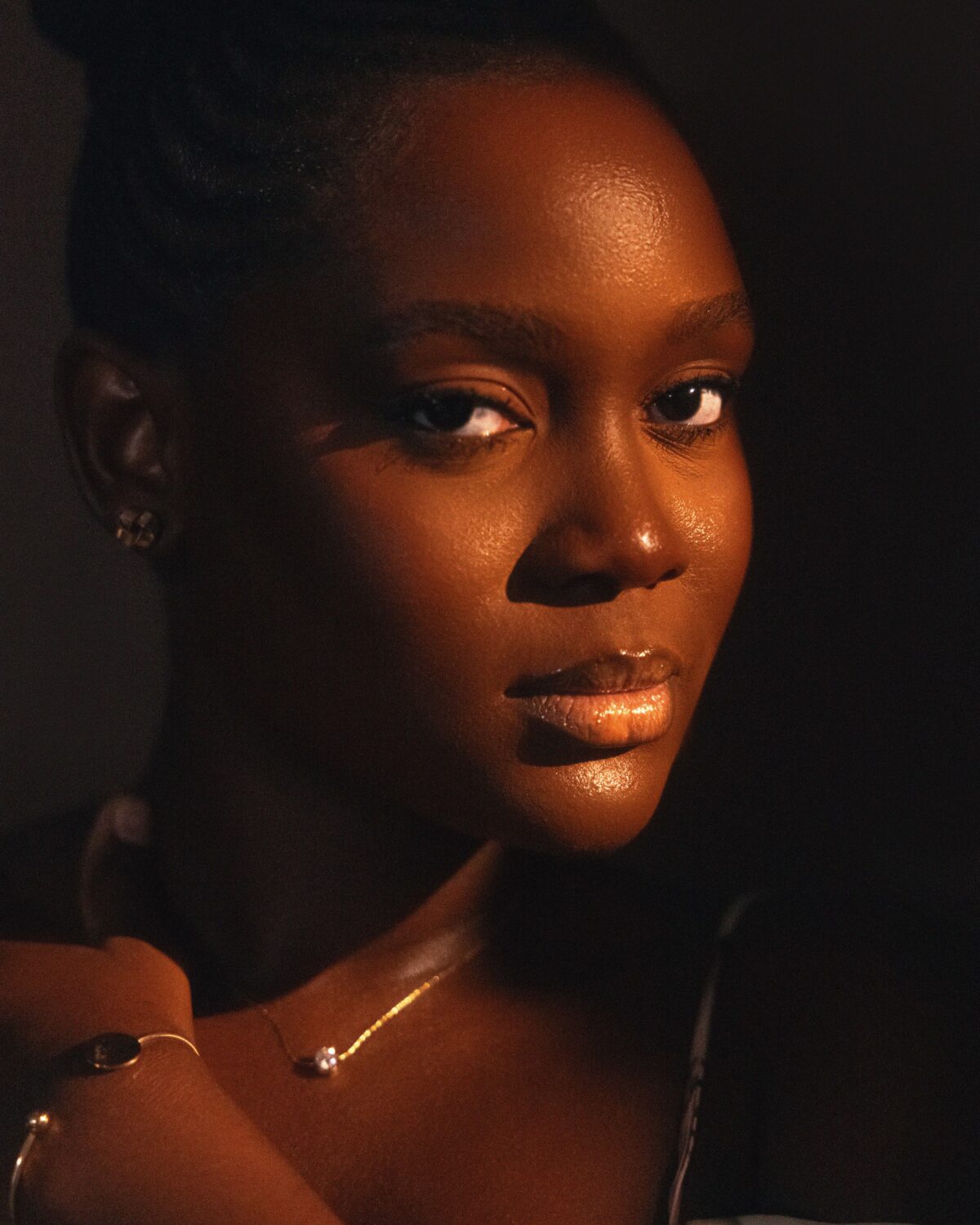
From learning the craft of acting to discovering music as another language for her creativity, Osas Okonyon is building an artistic life around the willingness to keep changing, exploring and becoming.
Ten-year-old Osas Okonyon did not know exactly what she wanted to be. She changed her mind often. But beneath the uncertainty was a conviction that she would be great. She would do beautiful things. She would become a big deal.
Years later, when asked what she would say to that ten-year-old child, her answer is simple.
“You are right. Do not let anybody tell you otherwise.”
It is an answer that makes more sense when placed beside the story of the woman she has become.
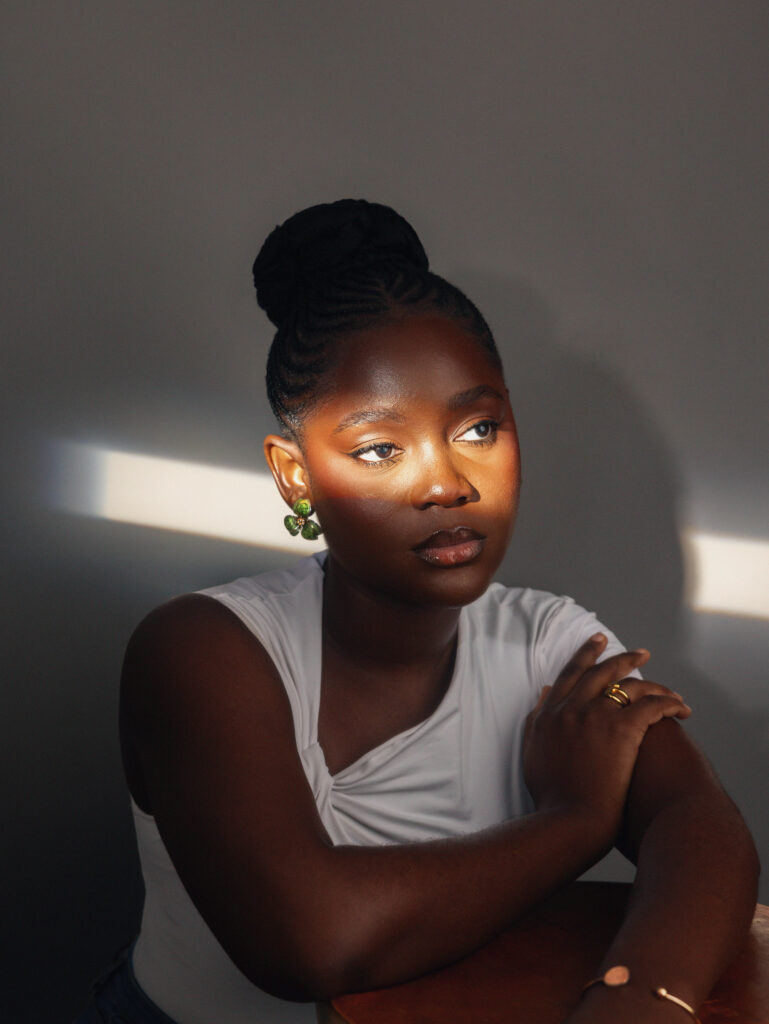
Acting had always been somewhere in Osas’s imagination. But for years, it remained something she approached in fragments: an audition here, a tape there, another creative pursuit in between. It was only in 2023 that she made the decision to pursue acting fully and professionally.
The decision did not come with a map.
The early years were, in her words, largely about feeling her way through the darkness. She had to learn how the industry worked: how to audition properly, how to charge, how to navigate the business of being an actor. She discovered that even auditioning was a craft of its own.
Then, in 2024, she went to film school.
What she found there was not a new passion so much as a new structure for an old one. She began to understand acting less as something she could simply feel her way through and more as a discipline that demanded systems, preparation and precision.

Learning the Craft
The change is evident in the way she talks about her work now.
“When I first started, it was very much just vibes,” she says.
Now, there is a process. She breaks down characters. She analyses scripts. She thinks about choices and the right moment to make them. The spontaneity remains, but it sits on top of something more deliberate.
For Osas, growth has meant learning that acting is not simply a question of being good or bad. It is about choices, and about building a system that allows those choices to land.
That understanding extends beyond acting.
When she wrote and starred in The Lump in Your Throat, she learned another difficult lesson about being an artist: that loving a piece of work doesn’t mean protecting every part of it.
The story was personal. Its emotional weight mattered to her. But once production began, she had to separate the reason she made the work from the decisions required to make the work function.
A scene could be important to her and still not serve the story.
“If a scene has to go, it has to go,” she says.
It is a practical philosophy, but it reveals something deeper about her evolution. The artist has to care deeply enough to make the work, then care enough about the work to let go of what does not belong in it.
That tension between feeling and discipline became particularly important with EVI.
By then, Osas had already established herself in the short-film space and had worked across writing and crew departments before appearing in Makemation, where she played Dooshima Shija. The 2025 film marked her cinema debut and placed her alongside a large ensemble of established performers.
But EVI represented a different scale.
It was her first major role, and the character demanded more than simply inhabiting a written personality.
Evi sings. She dances. She dreams of becoming a star. She is ambitious, flawed and fiercely protective of the thing she believes will transform her life.
Osas approached her without judgement.
She read the story repeatedly, asking what motivated Evi, what made her tick, where they were alike and where they were different. The goal was not to decide whether Evi was right or wrong, but to understand her well enough to love her.
“To become Evi, I had to love her,” she says.
That love was necessary because there were parts of Evi that Osas recognised in herself.
Every artist knows something about wanting to become the person they have imagined themselves to be. They know what it means to feel close to a dream and become protective of it. They know how easily the pursuit of the work can consume the person doing it.
Osas understood Evi’s hunger.
She also understood the love surrounding her: the people who continue to believe in an artist even when the artist becomes difficult to believe in herself.
That, too, was familiar.

Becoming Evi
Playing Evi also required Osas to extend herself physically. She had to sing and dance, and spent time studying recording artists before production, observing how they moved and worked in the studio so that Evi could exist beyond the version of herself Osas already knew.
Music, which had always occupied a more private corner of her creativity, consequently became part of the public story.
Her performance of “All My Love” with Abbey Wonder eventually earned a 2026 Headies nomination for Best Original Song for Visual Media.
For Osas, the significance was not simply the nomination itself.
It changed how she understood the place music could occupy in her life.
“Music has always been my baby,” she says. Acting had made her accustomed to sharing herself with the world through auditions and performances. Music had been different: something she did because she loved it, without expecting anything from it.
Then came the recognition.
“This journey showed me it could be more than just my private baby.”
“Yes, I am an artist. Actually, I am a recording artist.”
The two disciplines had begun to speak to each other.
Recording the songs for EVI changed the way she understood Evi herself. The character’s emotions did not end with dialogue. Music gave those emotions another language, another dimension, and hearing the songs repeatedly in her own voice gave Osas another way into the character.
It is one of the clearest examples of how the different parts of Osas’s creativity overlap.
As a writer, she thinks about what the writer might have poured into a scene. As an actor, she gets to embody it. As a filmmaker, she understands that every emotional choice eventually has to survive the practical demands of production.
She does not seem interested in choosing which part of herself is the “real” artist.
When asked whether she would choose funding for music or film, her answer is immediate:
“I would take both. Give me access to the money.”
The joke contains a serious point.
Why choose between the languages when she is still learning what each one can say?
That curiosity has followed her into her acting.
EVI was not her first lead role, but it was her first major one. Her earlier lead project, Her Daughters’ Mother, has now been announced as part of the Film Africa 2026 programme. Directed by Chinazaekpere Abigail Chukwu, the feature stars Osas alongside Ejovwoke Obad Olikuntuyi, Philip Asaya, Najite Dede and Adeoluwa Akintoba. It is scheduled to screen on October 28 at EbonyLife Place London.
In the film, Osas plays Ijaita, a fifteen-year-old girl.
The role demanded another kind of transformation.
She cut her hair. She lost weight to create a teenage build. She worked on her voice and developed a different physicality. Most importantly, she had to leave her adult self behind.
“You could not find Osas anywhere,” she says.
The emotional toll lingered after filming. She describes being in a funk for some time because of the intensity of remaining inside the character.
And yet, she would do it again.
Still Becoming
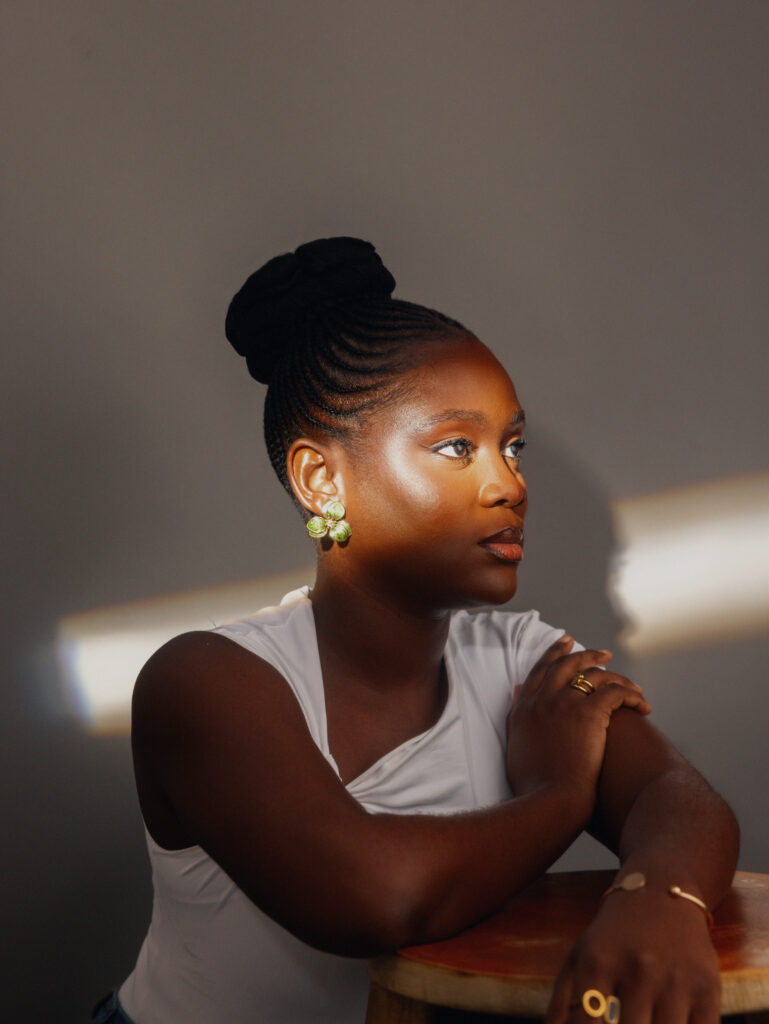
That willingness to disappear may be the clearest indication of where she is heading.
She wants characters that challenge the mind. Psychological thrillers appeal to her because she wants the kind of stories that make everyone question what is happening: whether the character is sane, whether the actor has gone mad, or whether the writer has simply lost it.
But challenge, for Osas, does not always have to mean darkness.
She wants romance too. Romantic comedies. Softer characters. A little love after all the crying.
What matters is that the work continues to demand something from her.
She wants characters that force her to “dig, explore, redefine and remodel” herself.
And perhaps that is what has been happening all along.
The girl who believed she would become somebody has grown into an artist who is still figuring out exactly who that somebody is.
The difference is that she now has the tools to investigate it.
She has learned that instinct needs craft. That sentiment needs discipline. That an actor must understand the writer, the character and the larger story. That music can say what dialogue cannot. That sometimes becoming someone else requires changing your voice, your body, your hair, even the way you move through a room.
But beneath all that technique is still the child who believed.
When Osas speaks to her ten-year-old self now, she does not promise that everything has happened exactly as imagined. There are still heights she wants to reach, stories she wants to tell, versions of herself she has yet to discover.
What she can tell that girl is that she was right to believe.
“I believe in her so much more now,” she says.
And maybe that is what Osas Okonyon’s journey has really been: a whole life becoming the evidence for a belief she had before she knew how to explain it.
That ten-year-old girl thought she would be a big deal.
Years later, Osas is still becoming.

Interview by Emmanuel Olabode
Credit: Photo courtesy of Gelax Chatroom.